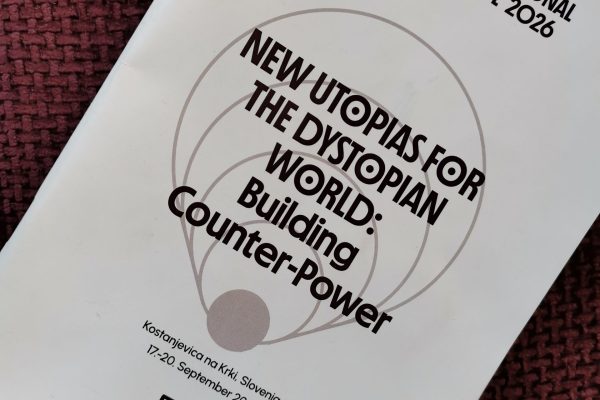
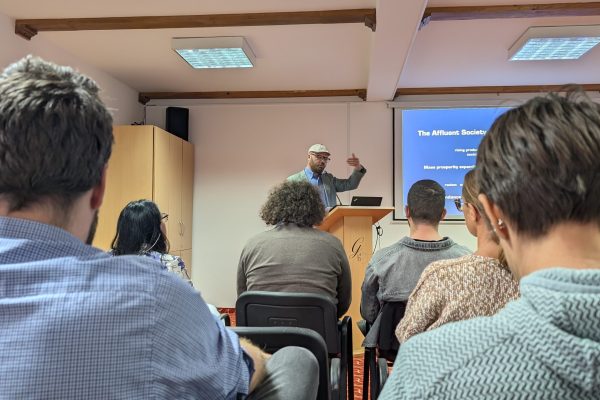
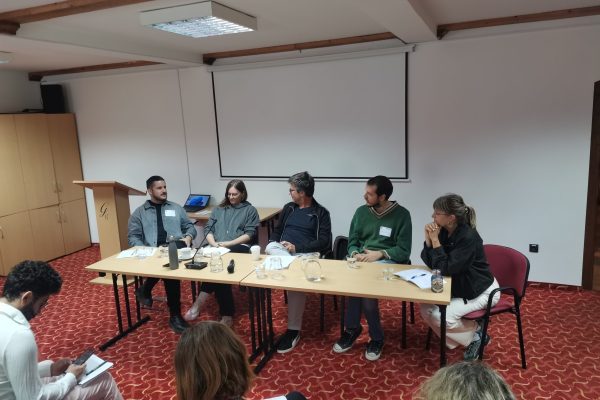
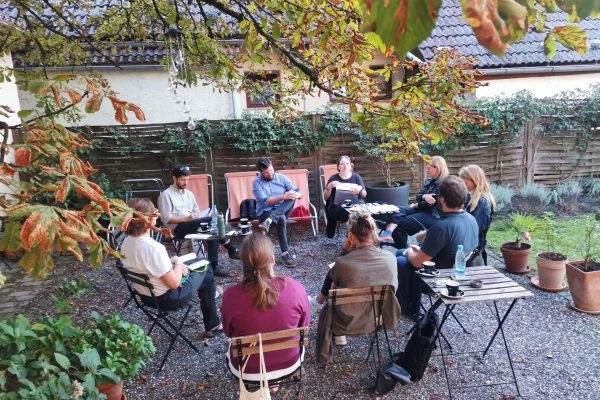
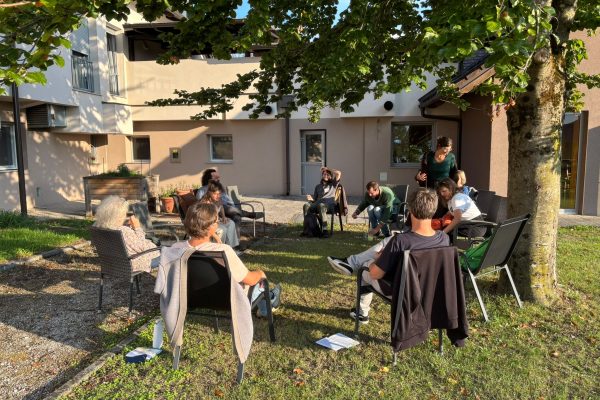
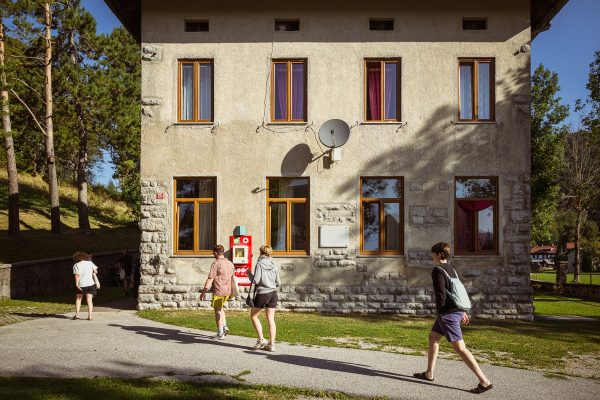
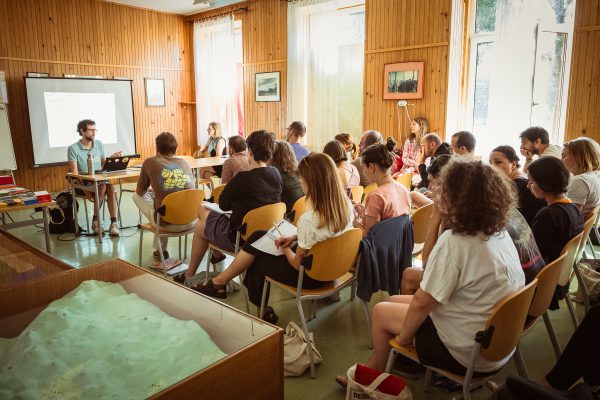
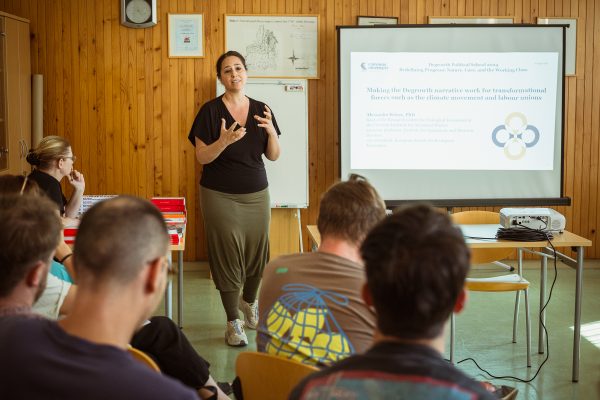
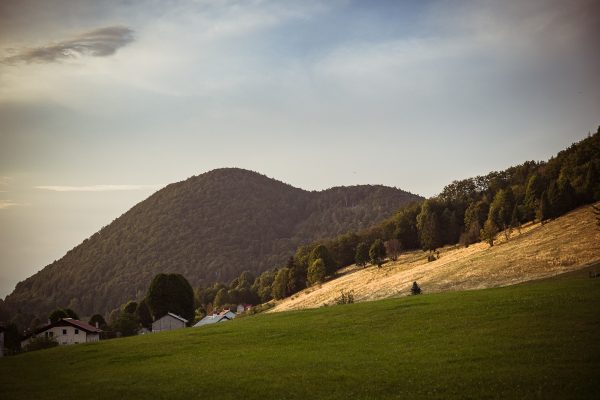
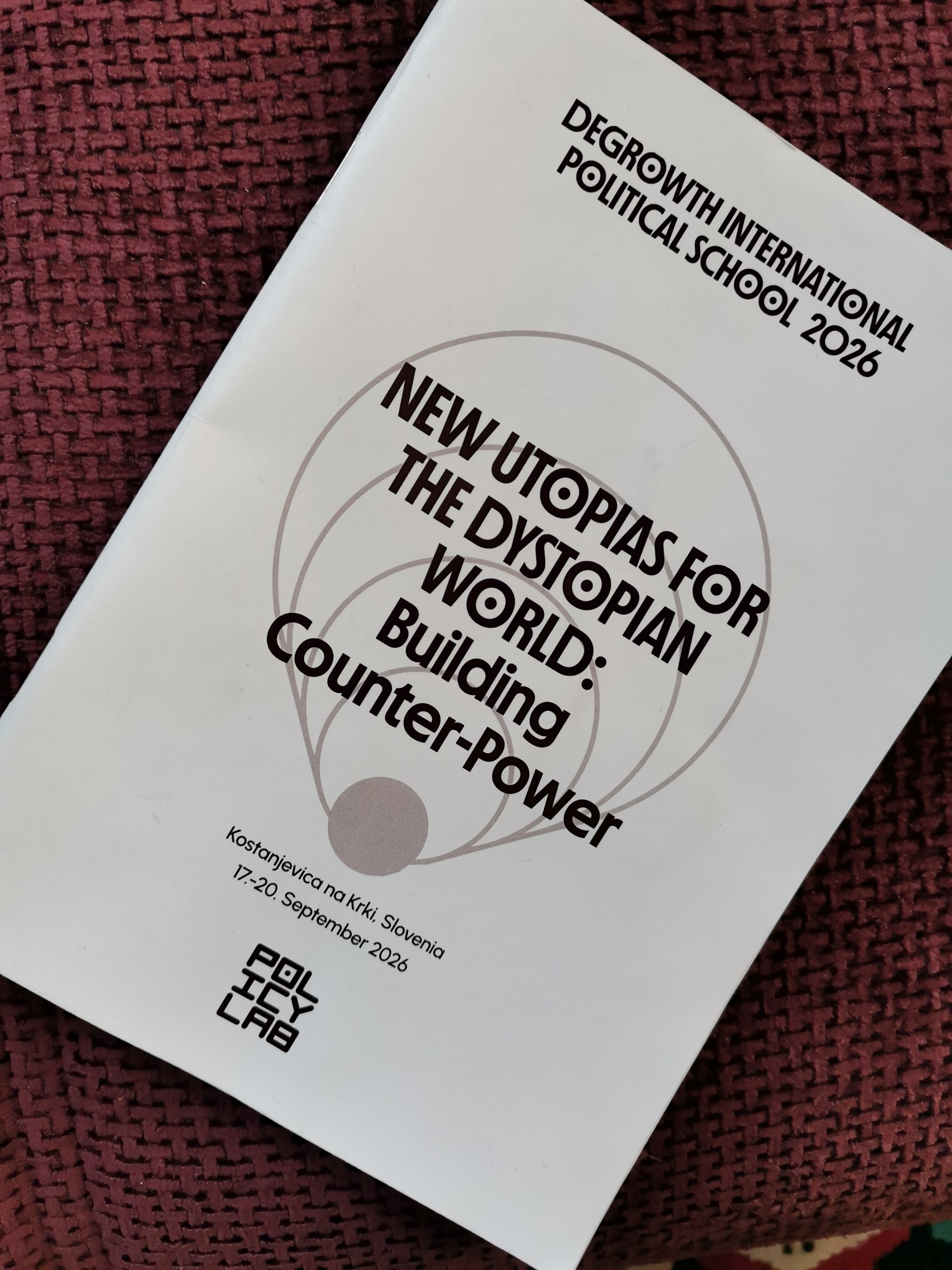
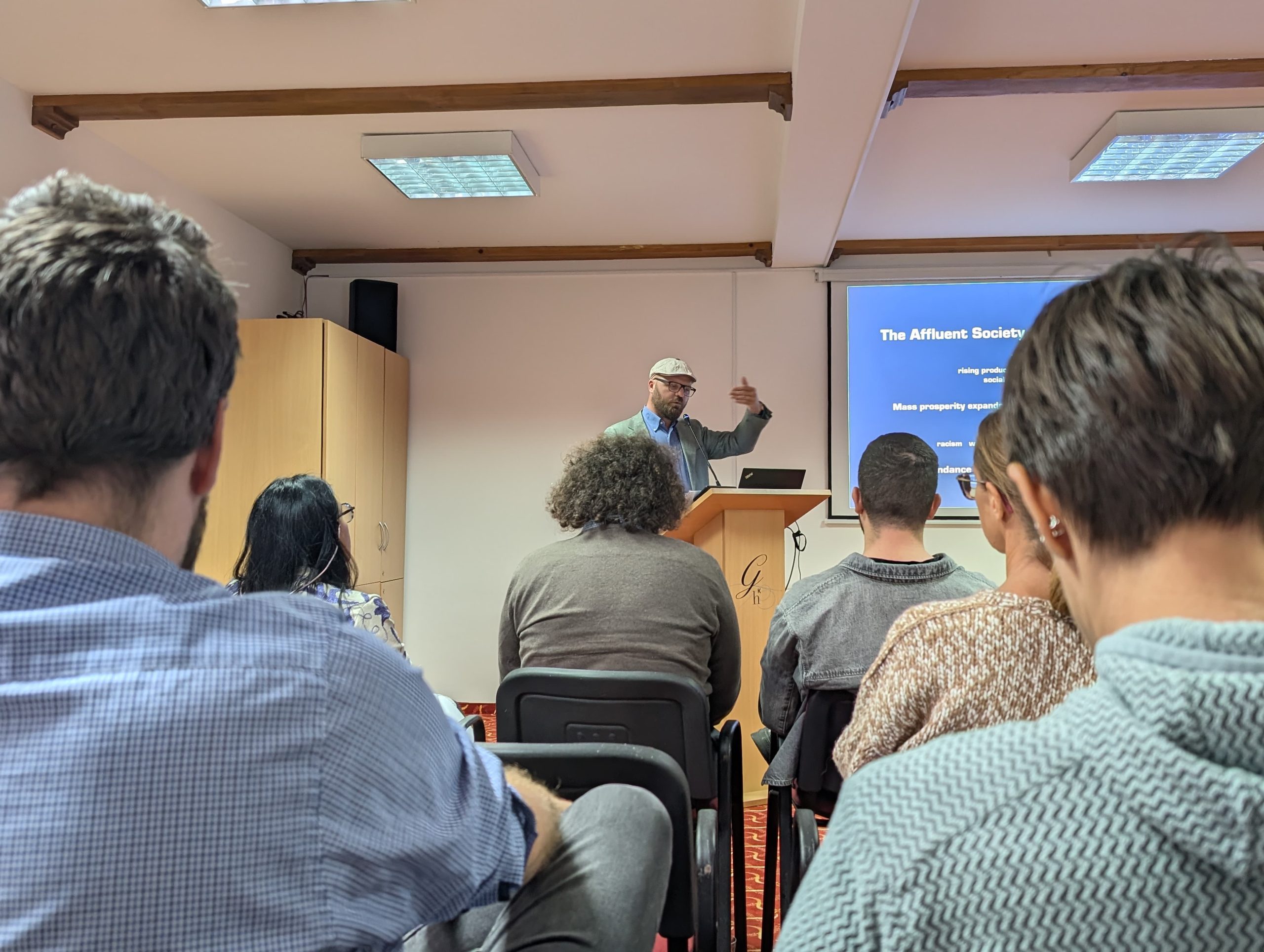
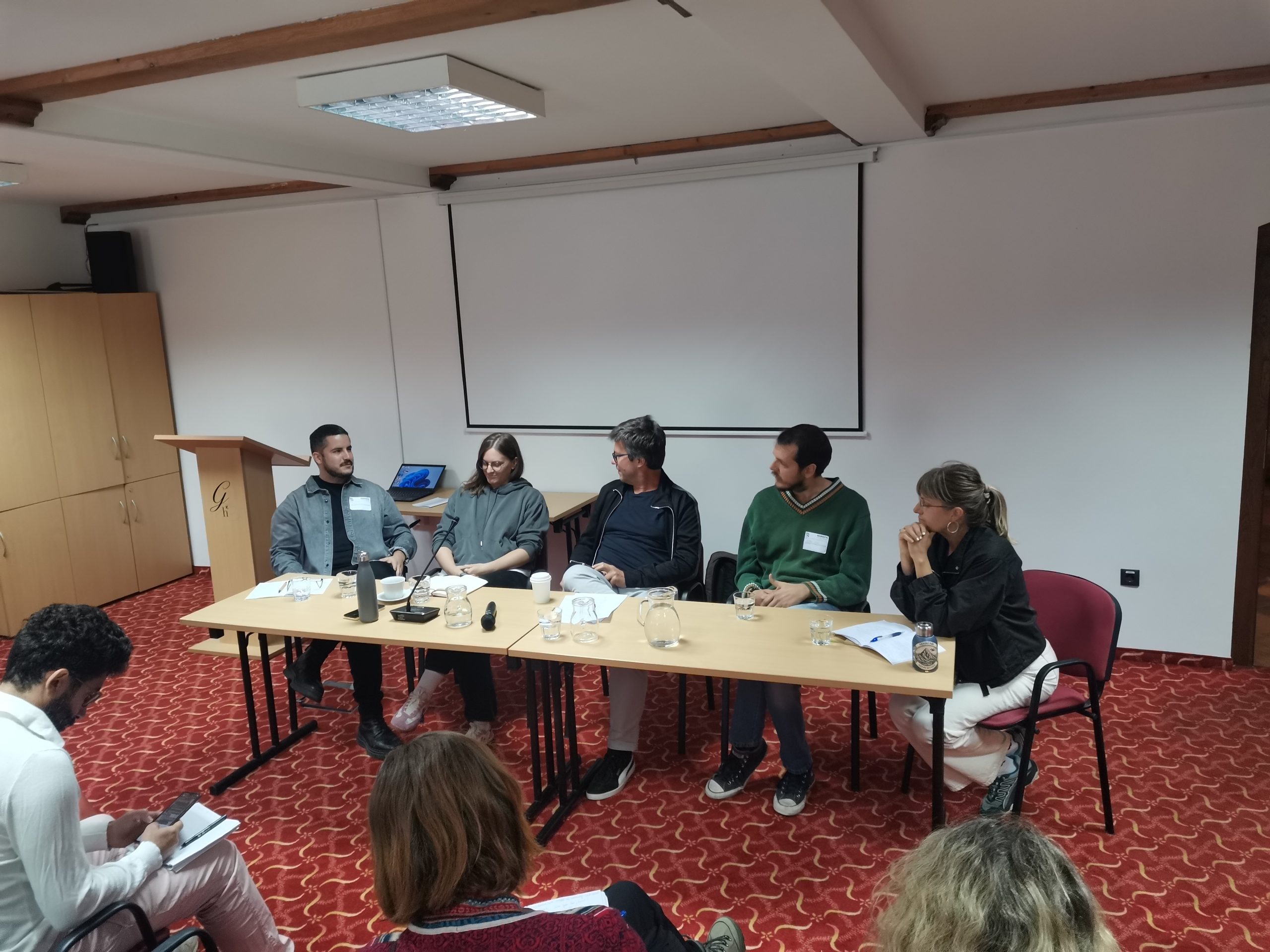
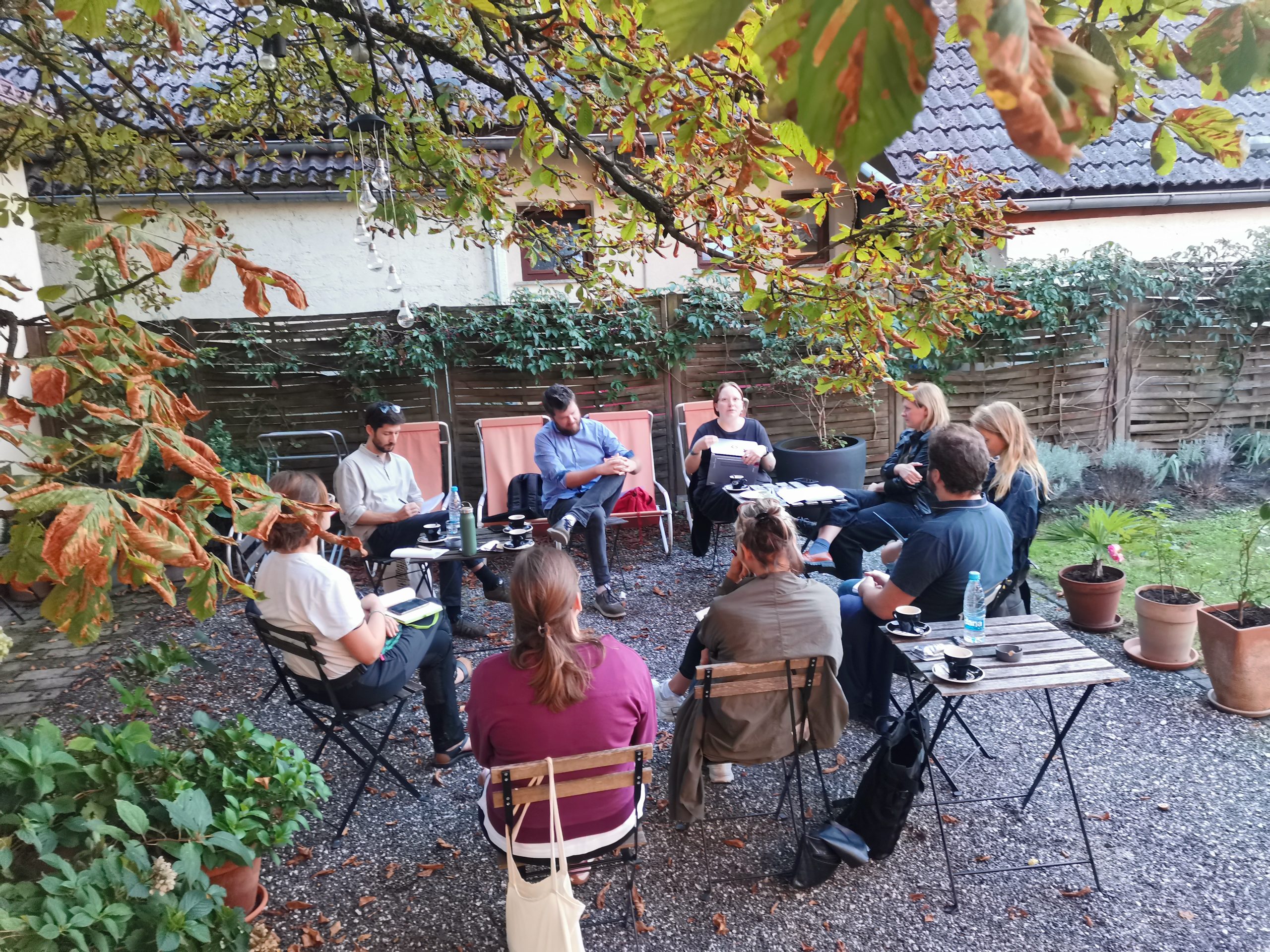
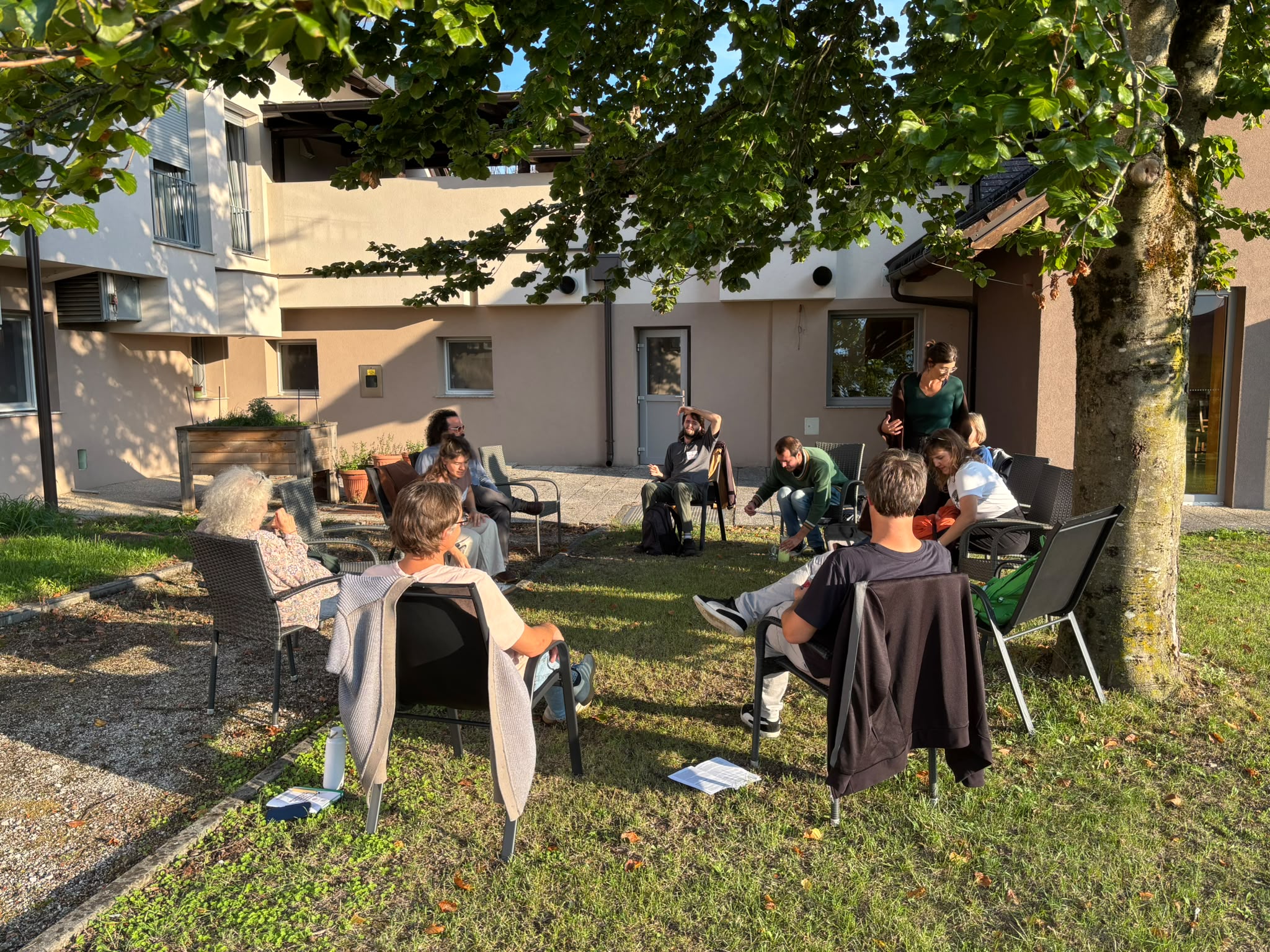
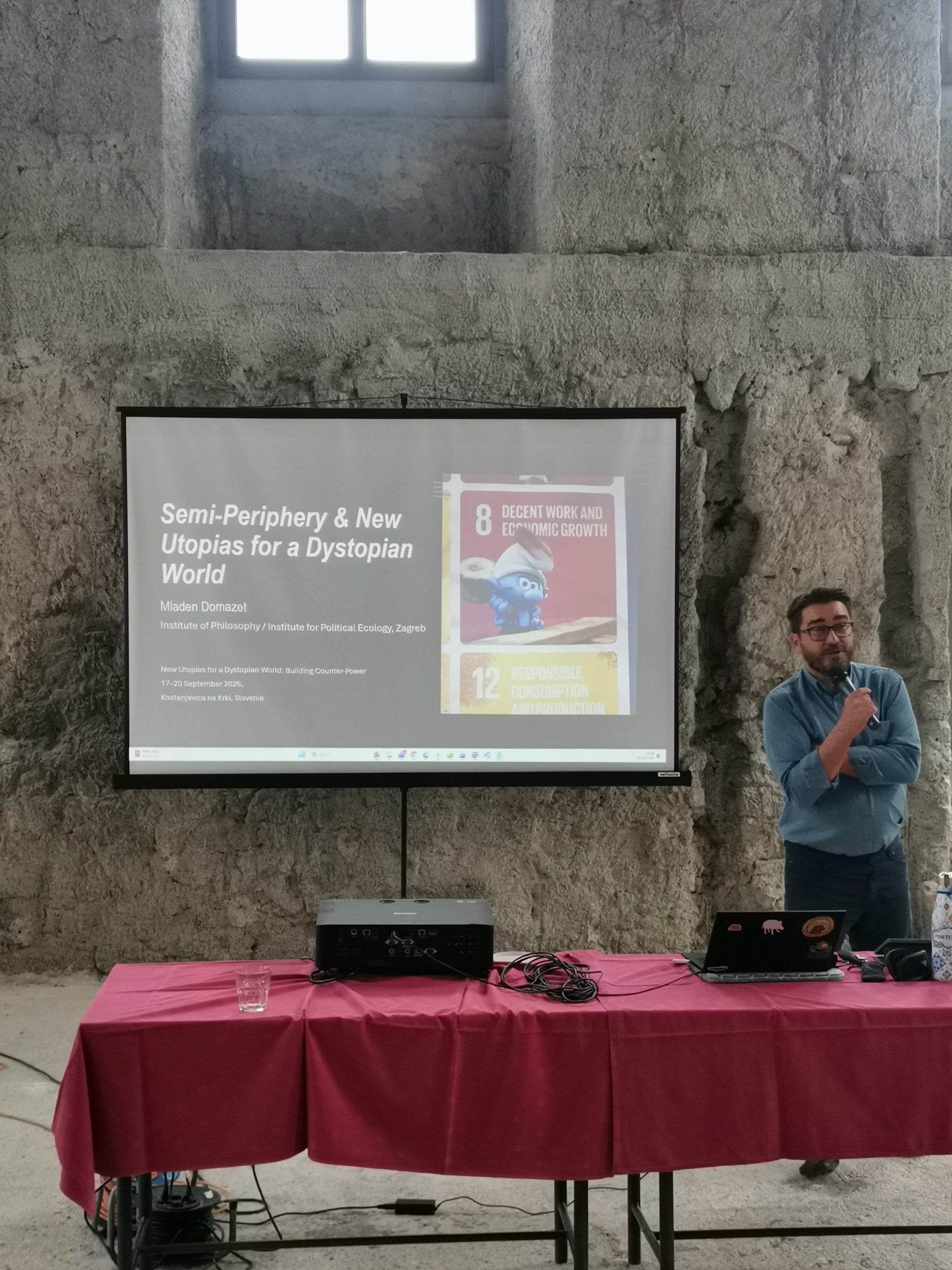
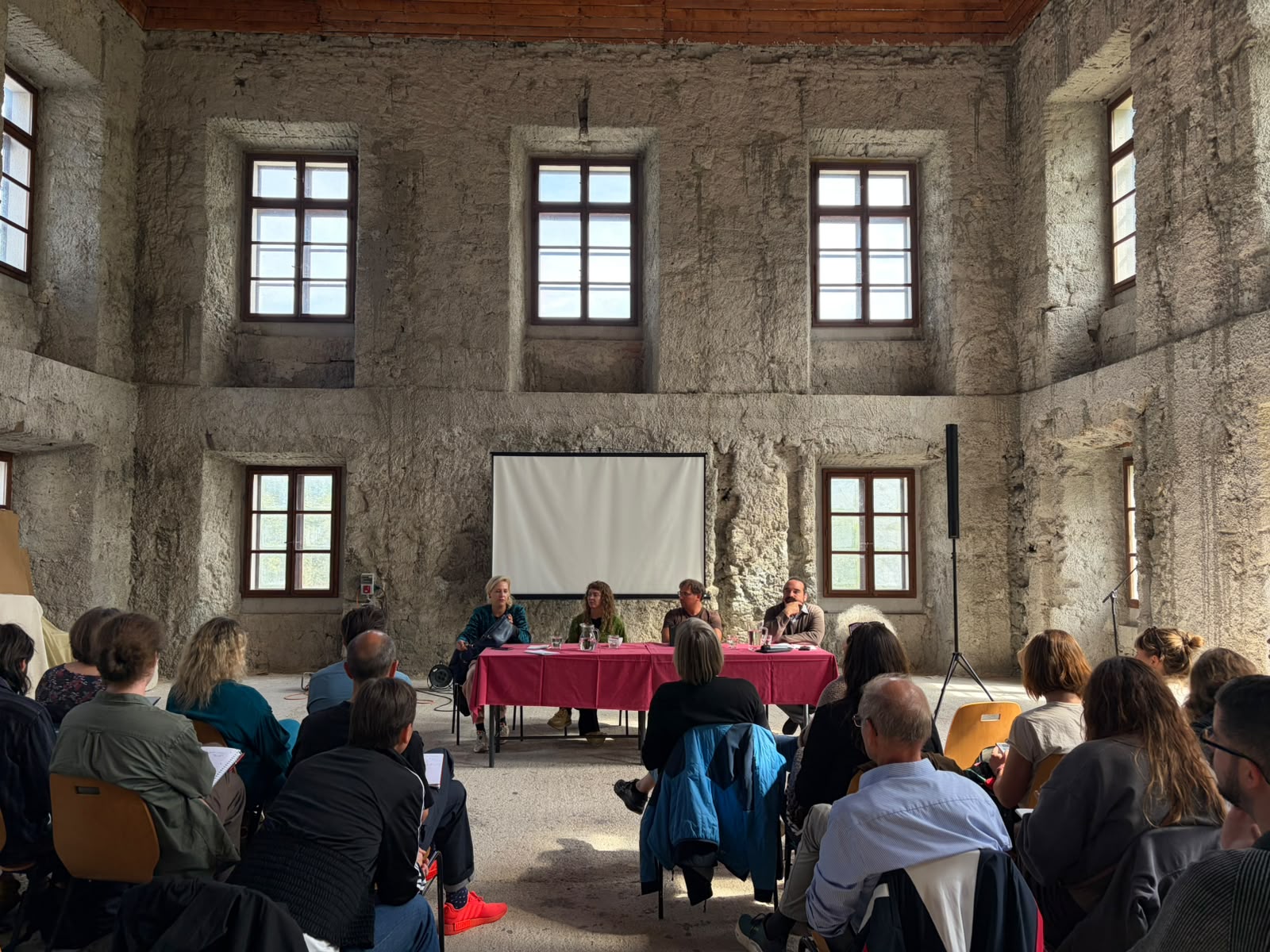
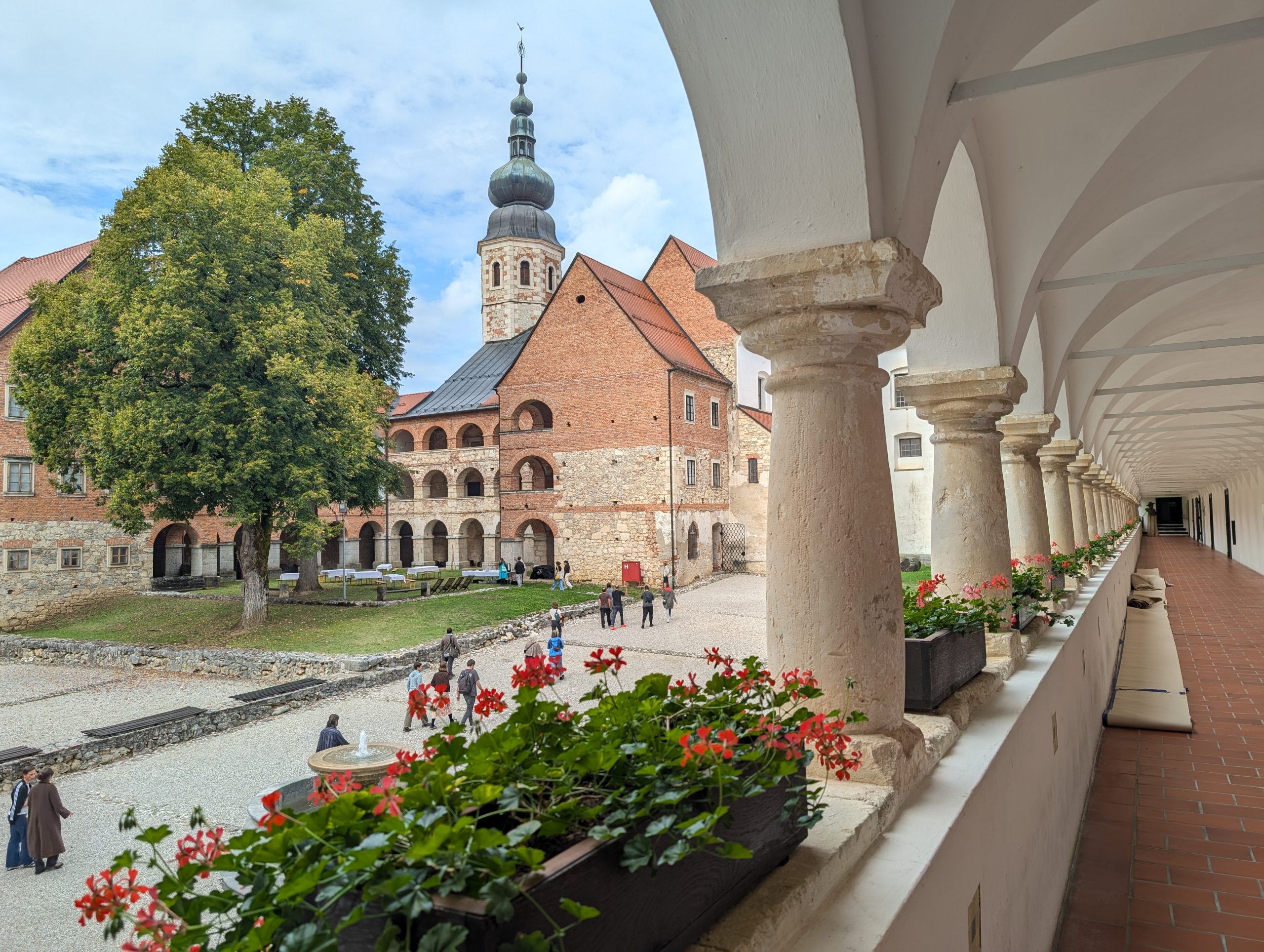
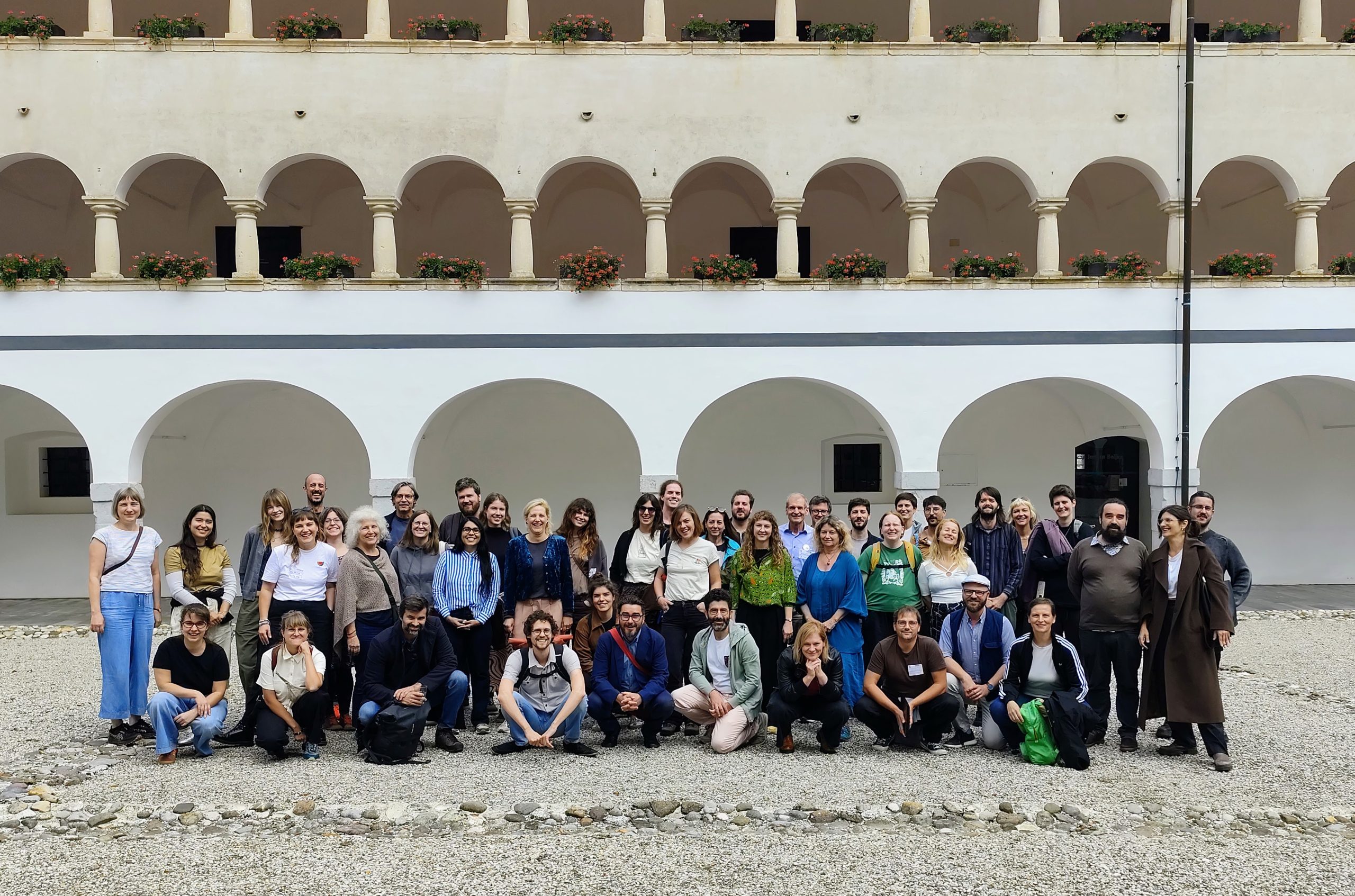
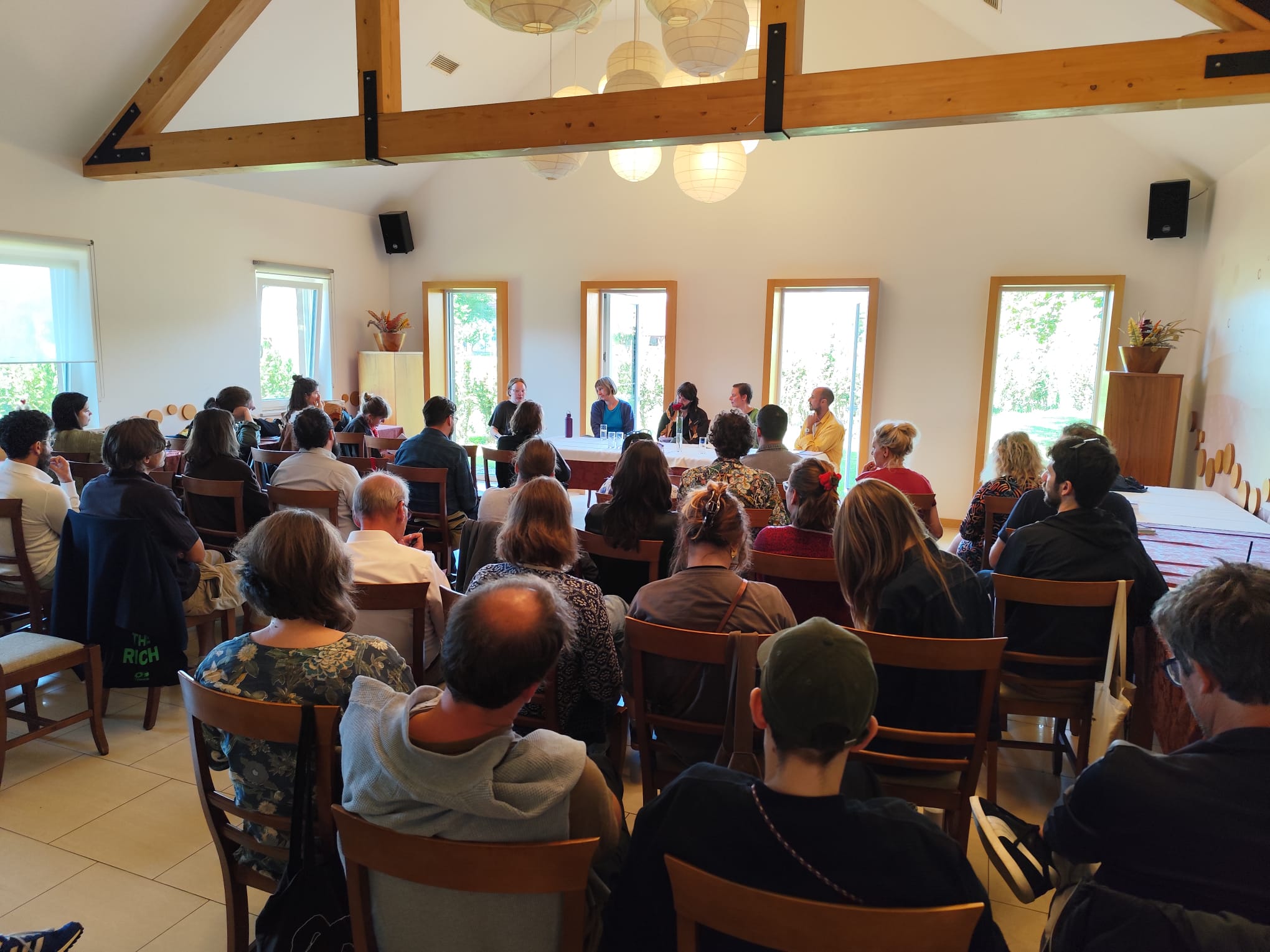
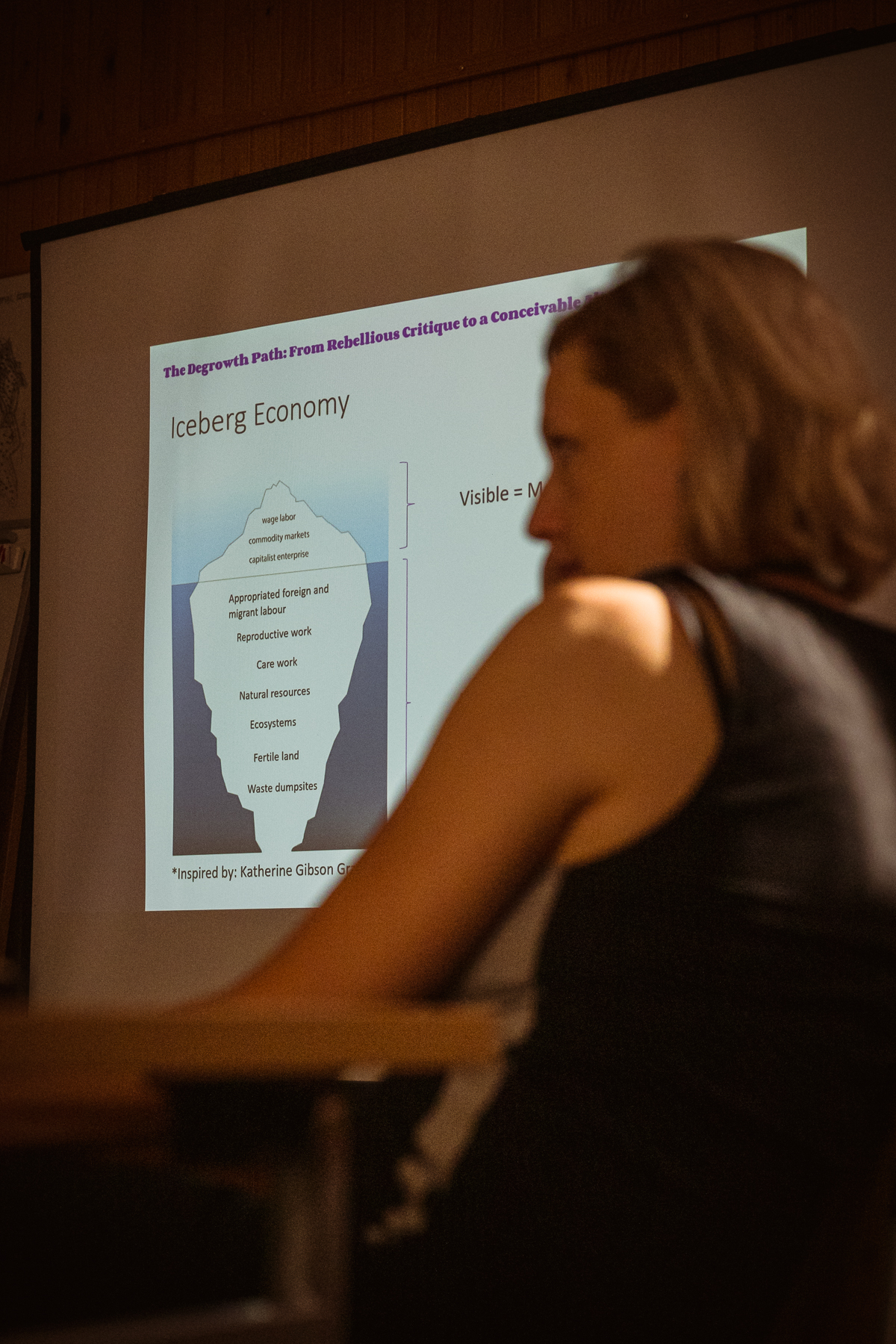
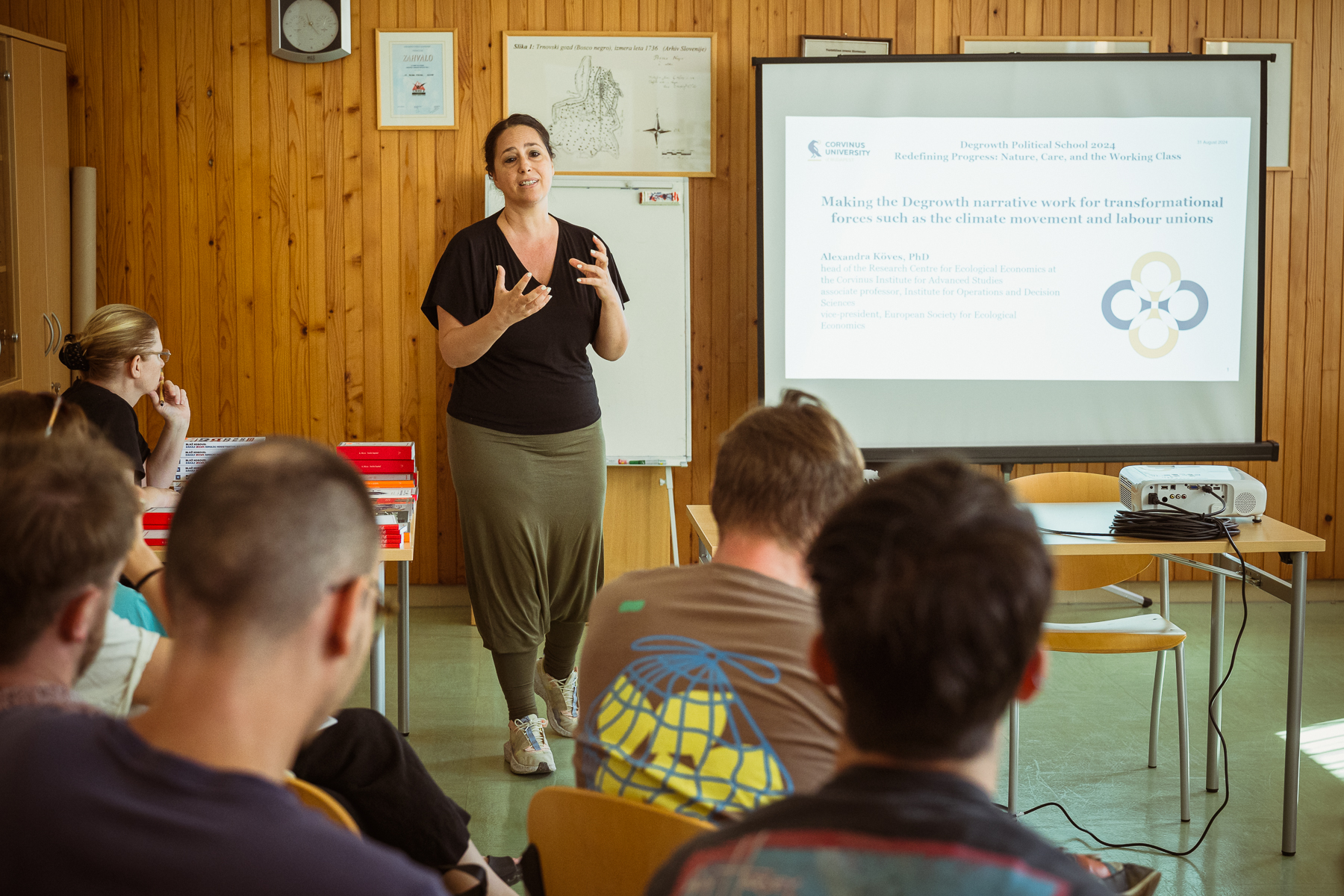
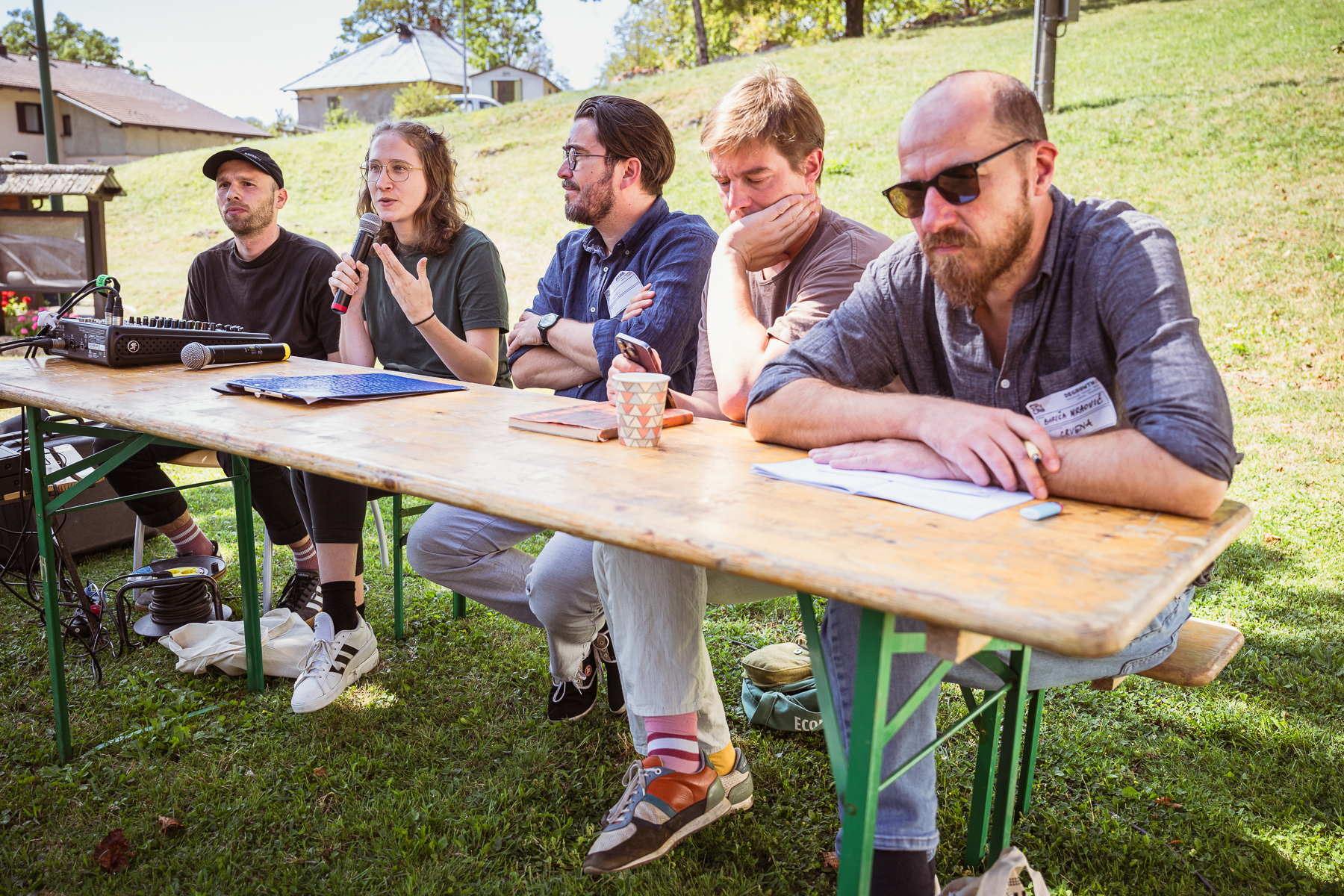
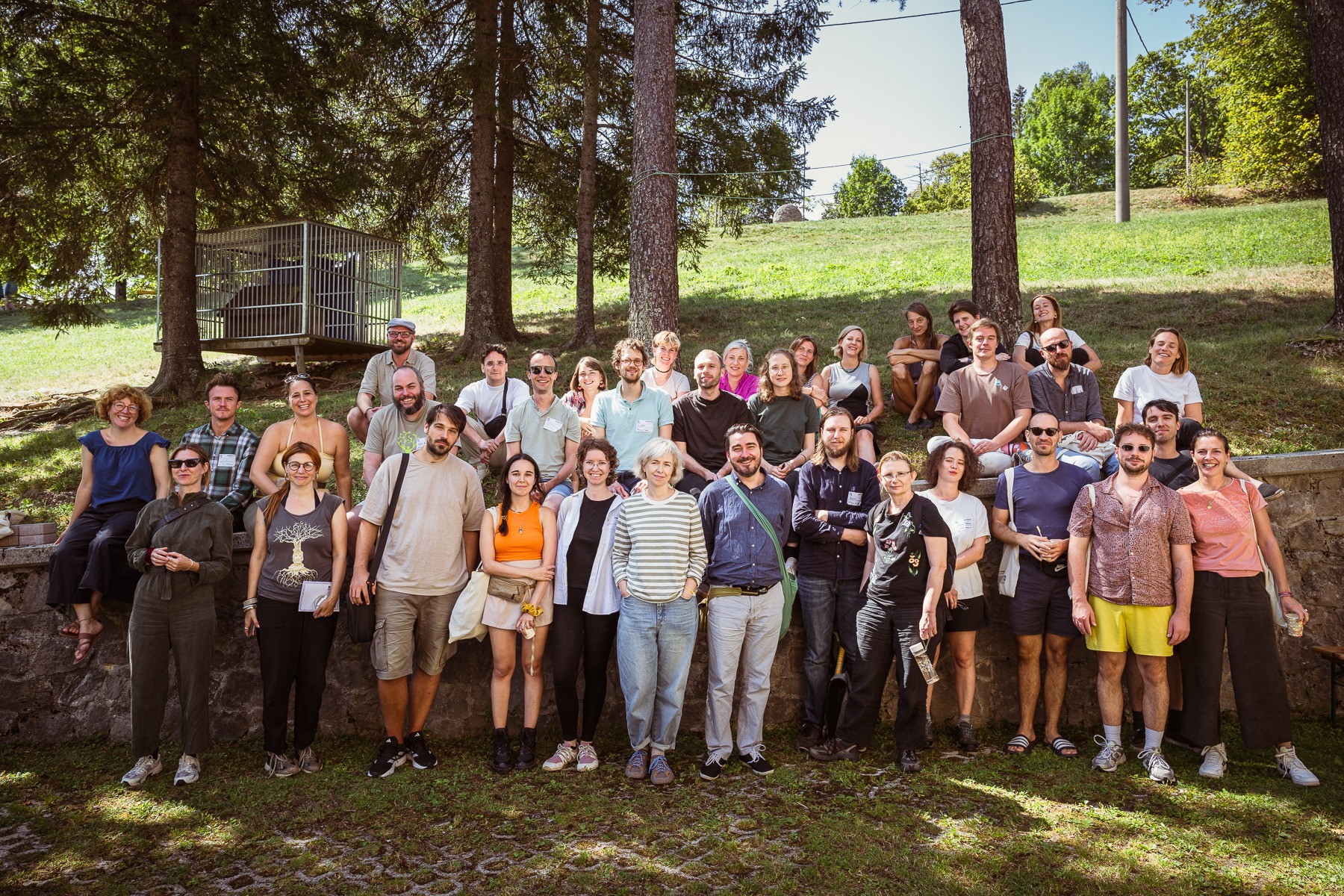
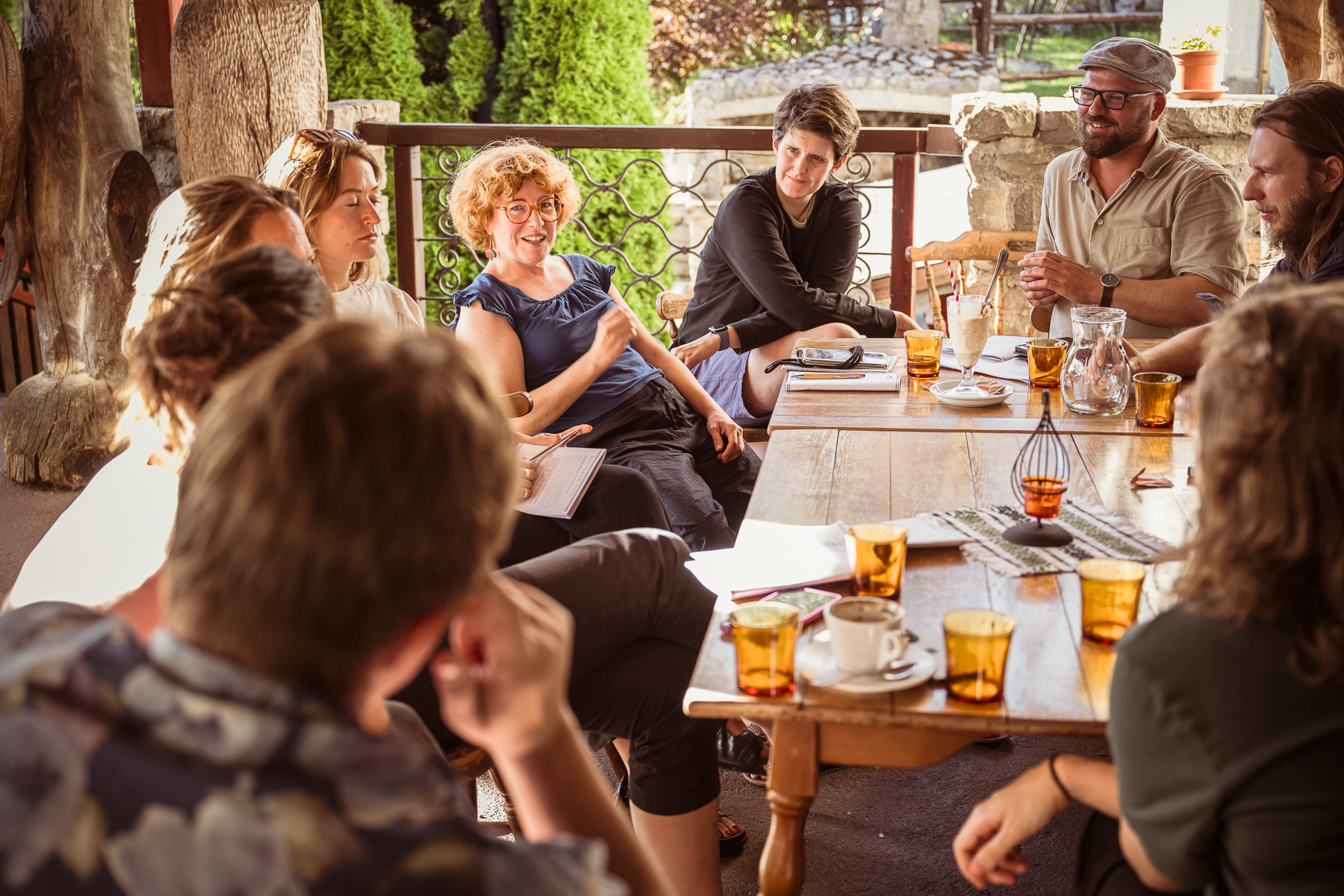
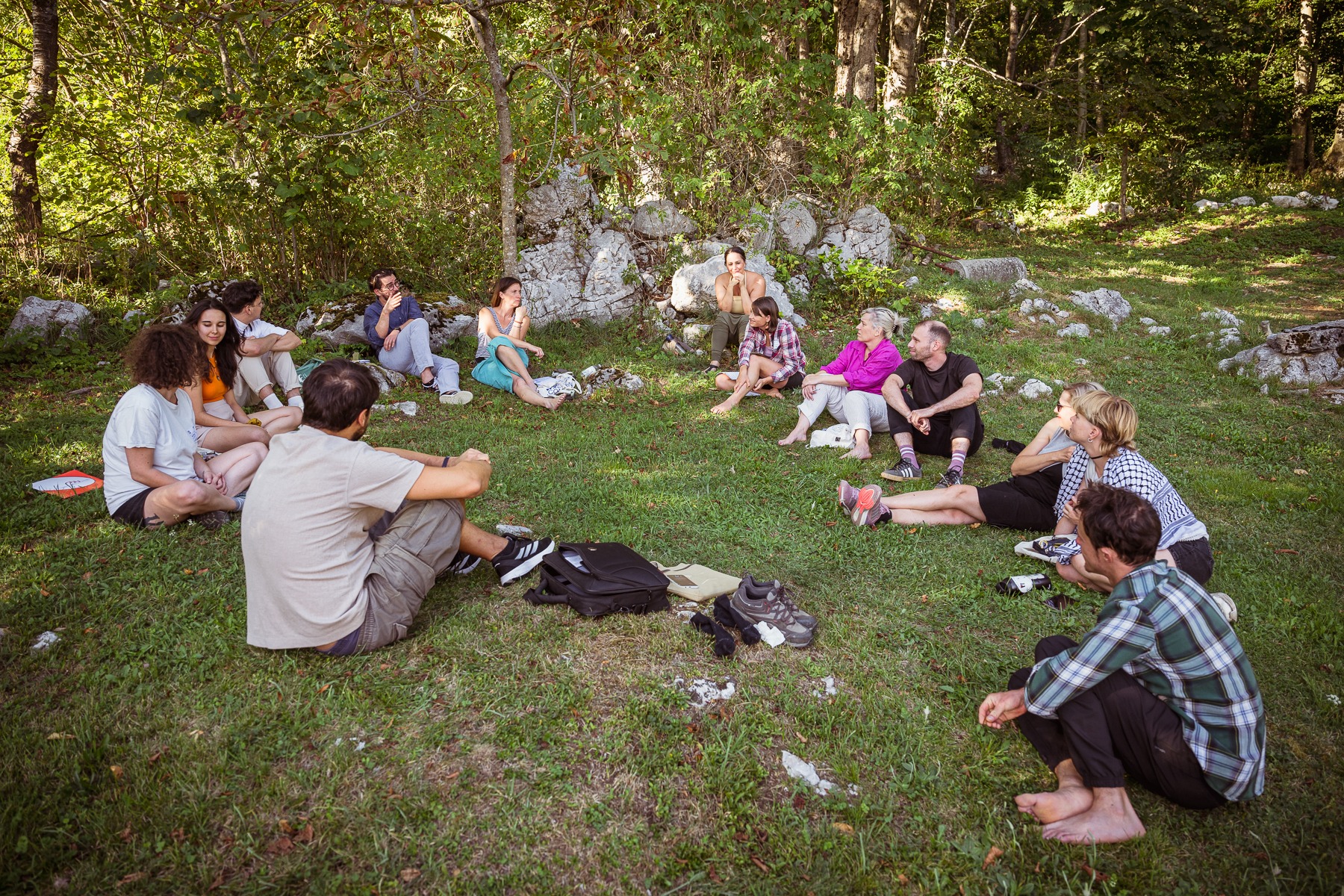
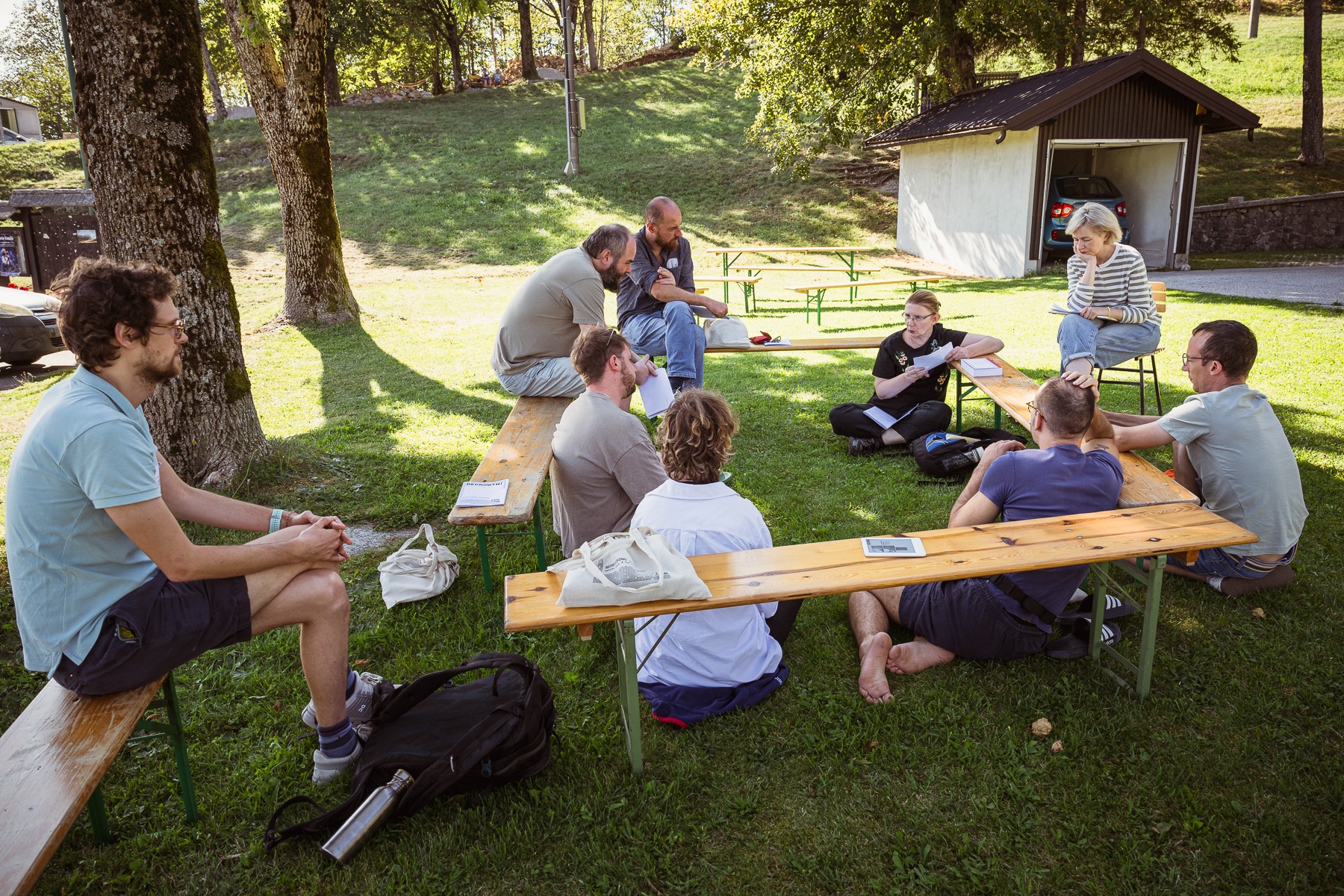
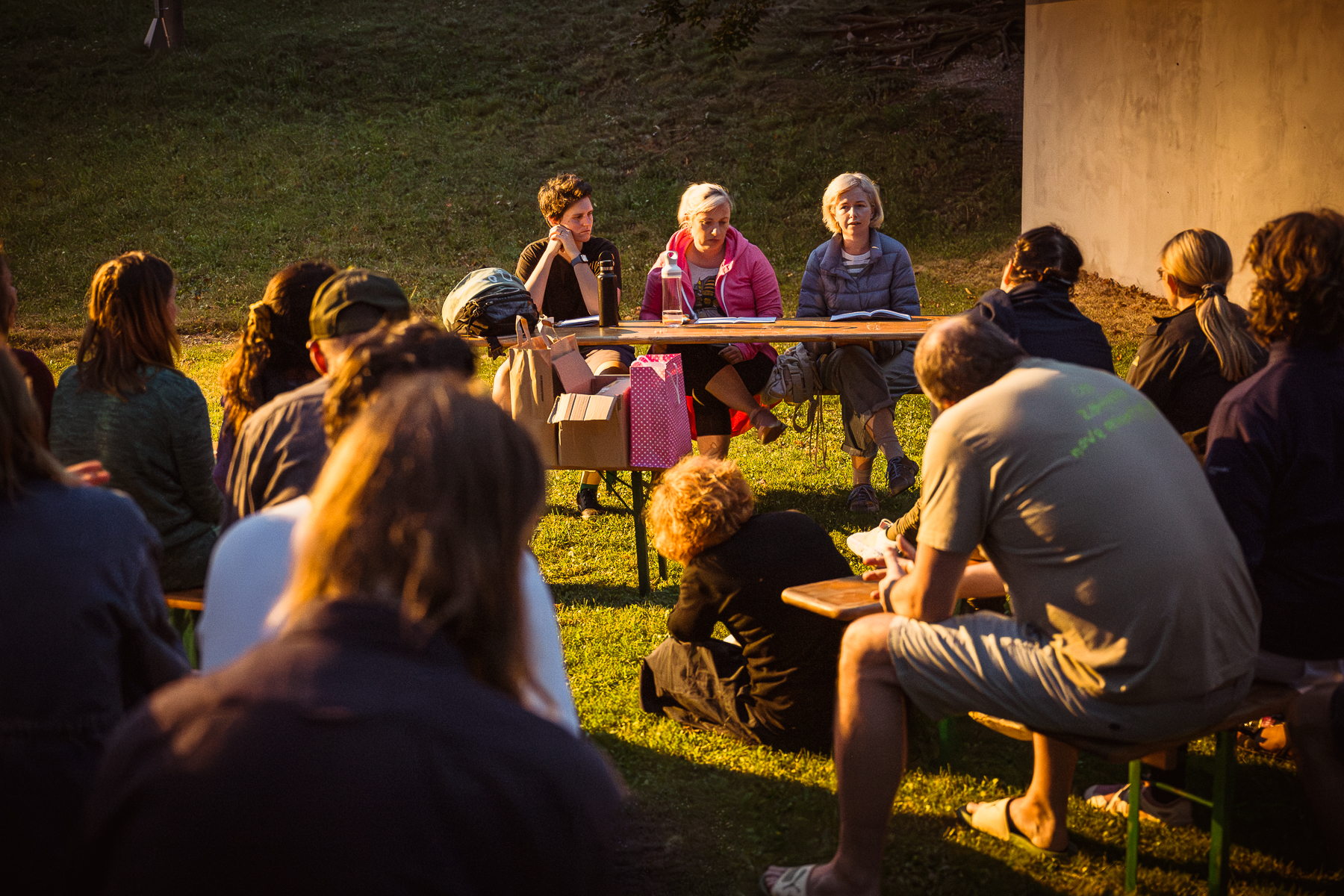
The 2026 Degrowth International School will take place in Slovenia from the 17th to the 20th of September 2026.
New Utopias for the Dystopian World: Building Counter-Power
Rather than treating degrowth as a research field or policy agenda, the School asks how degrowth can become a political force capable of building alliances, shaping public debate and strengthening counter-power. The programme will be organised around three interconnected thematic streams:
- Extraction vs. restoration-oriented economies
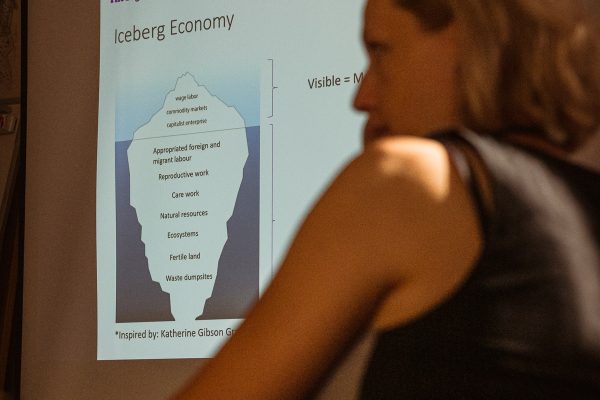
Examining extractivism, green capitalism, land, energy and resources, while exploring the political possibilities of economies based on repair, regeneration and collective need. It asks how societies can move away from models built on depletion and short-term profit towards systems that restore ecosystems, renew social infrastructures and respect planetary limits. - Crisis of social reproduction
Focusing on care, labour, housing, public services and the everyday infrastructures that make life possible. It will explore how the crisis of social reproduction is intensified by commodification, ecological breakdown and social inequality — and what it would mean to organise economies around the conditions for dignified life beyond growth. - Authoritarian push against planetary and social limits
Addressing the growing backlash against ecological limits, equality, democracy and solidarity. It will examine how authoritarian forces attack climate knowledge, deepen fossil-fuel dependency, spread disinformation and undermine collective capacity for change — while asking how progressive movements can build counter-power in response.
The 2026 School is being prepared together with Programme Board: Dora Kavčič (Zadrugator), Dora Matejak (the Faculty of Social Sciences, University of Ljubljana), Zarja Muršič (the Citizen Science Network), Alma R. Selimović (Zavod Bunker), Nejc Laznik (Kolektiv Rosa) and Martin Valinger (urbanist).