

Field Visit and Seminar in Brussels
This visit was part of the project Preparing CSOs for the Struggles Ahead – part of the call Catalysts of Change: Monitoring, Advocacy and Coalition Building for Environmental Justice – and and Political school of degrowth for culture workers, a Ministry of Culture RS project.
Date and location:
September 2, 2025
Brussels
Gallery:
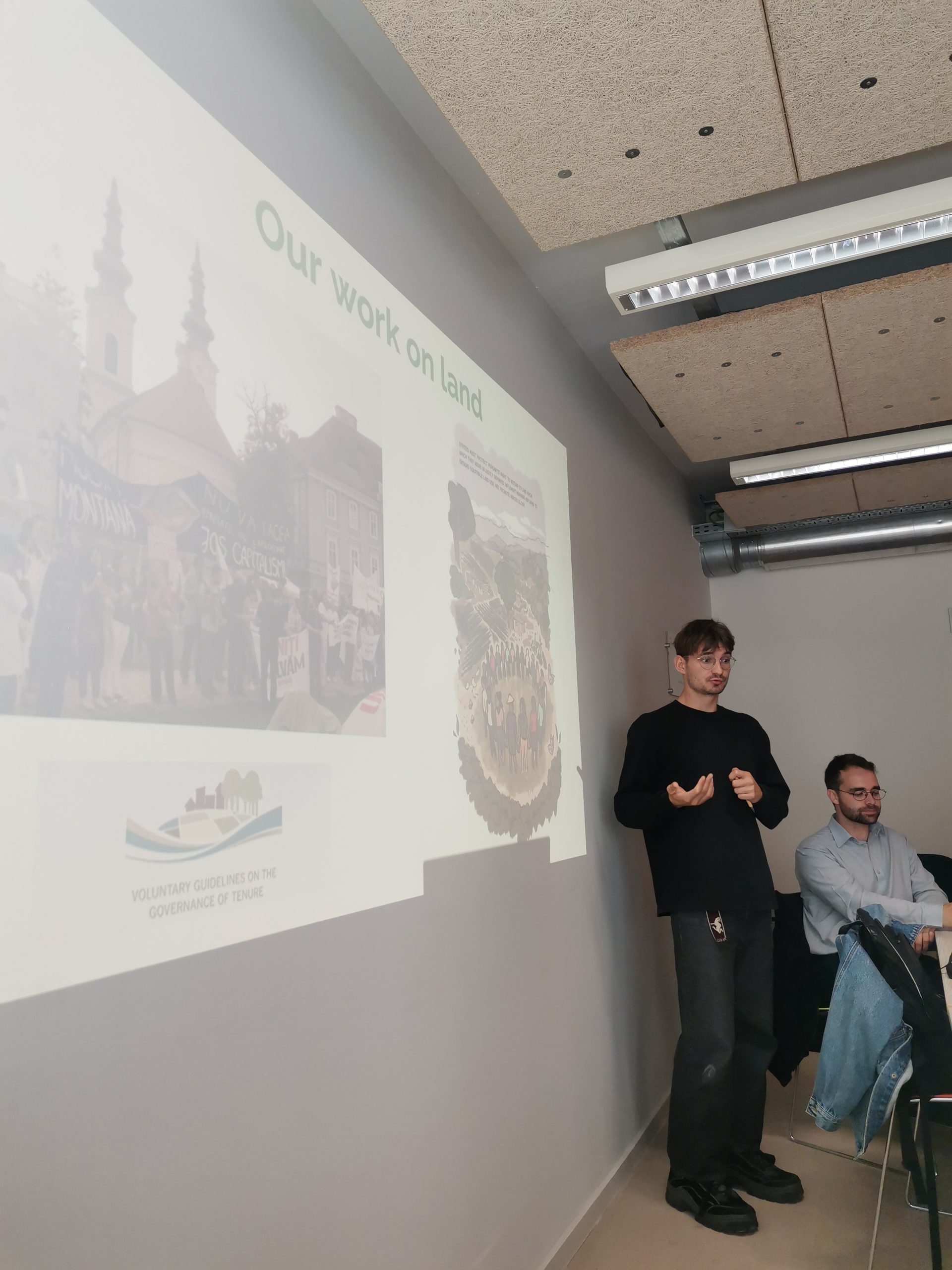
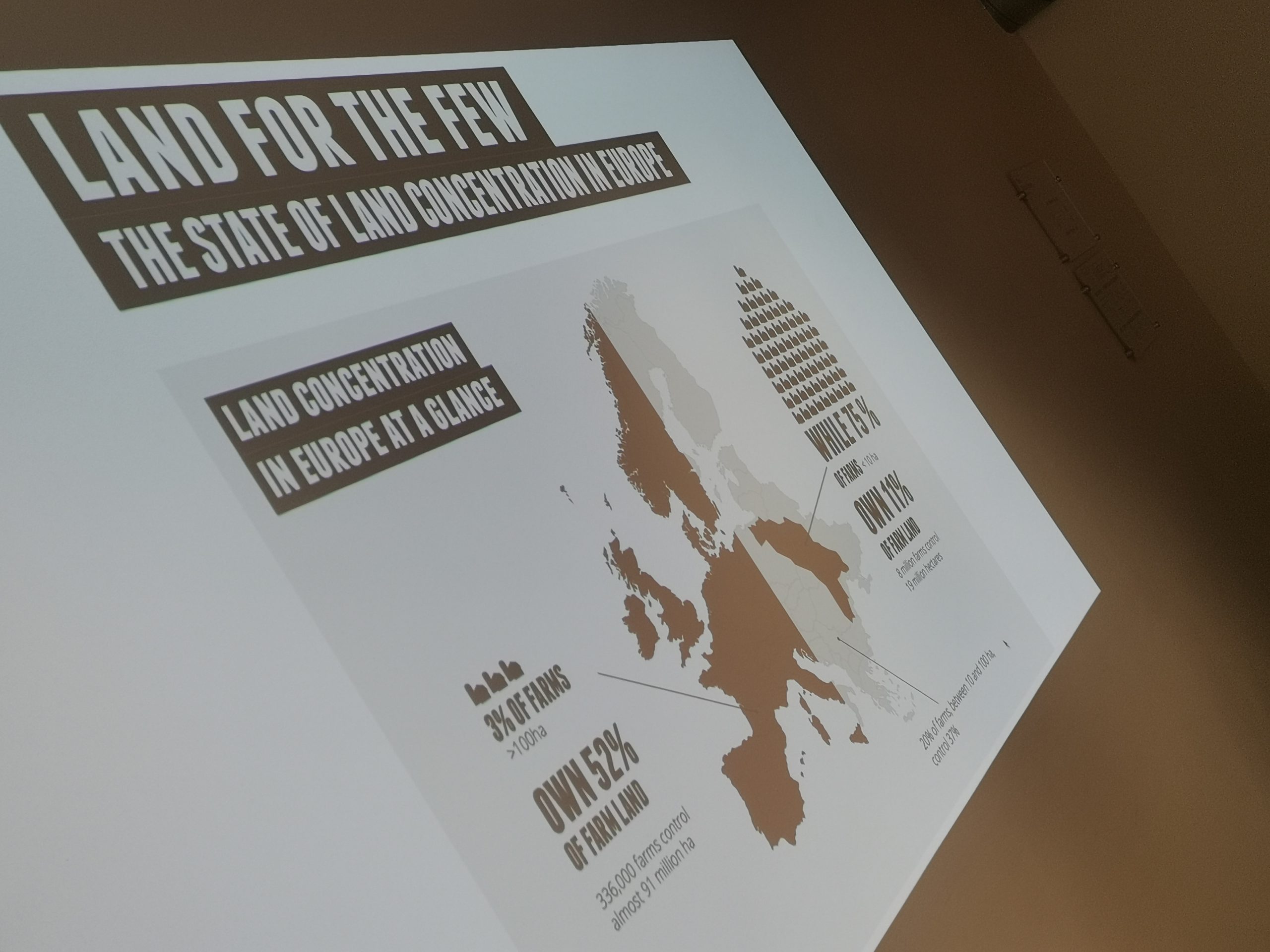
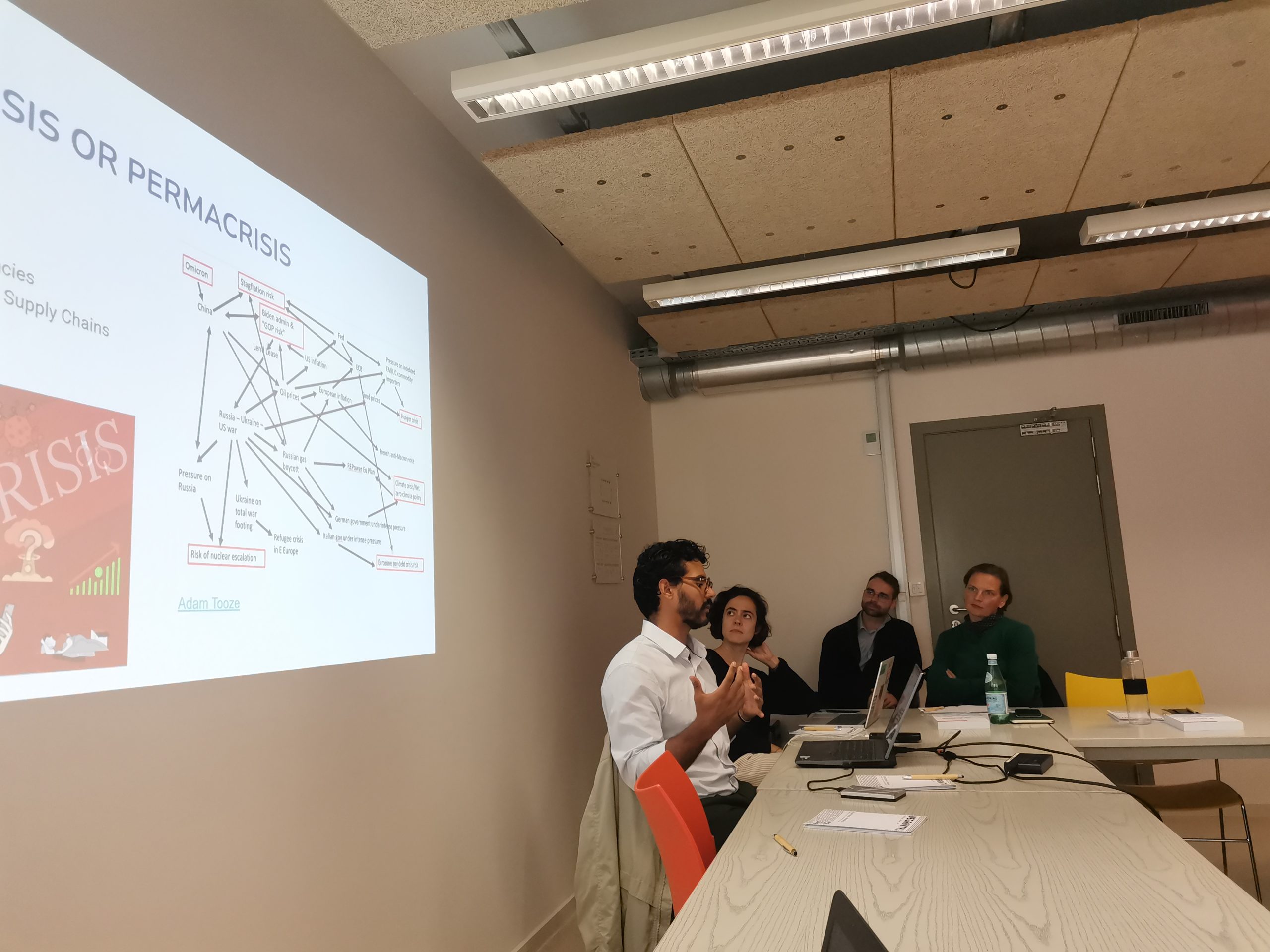
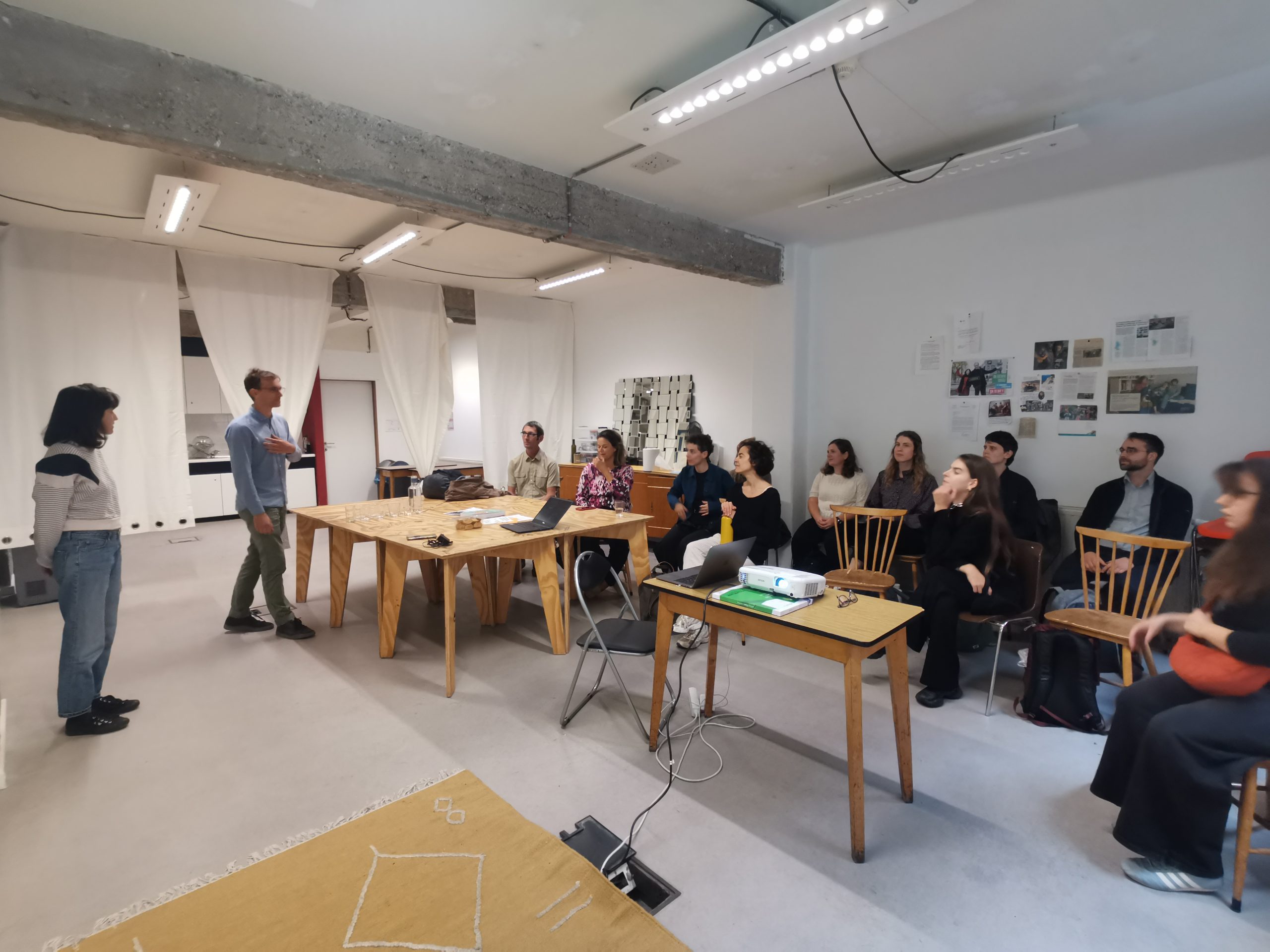
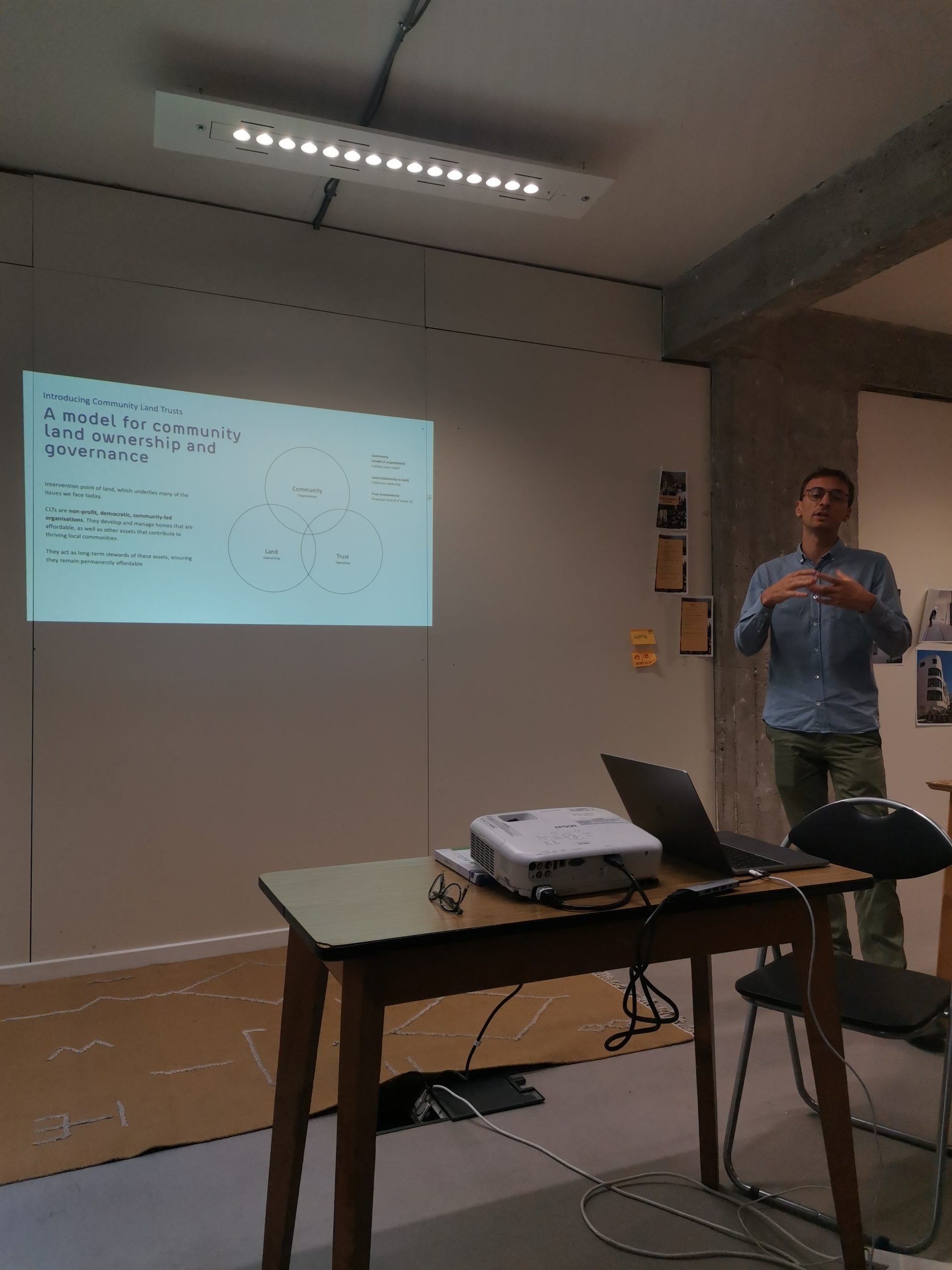
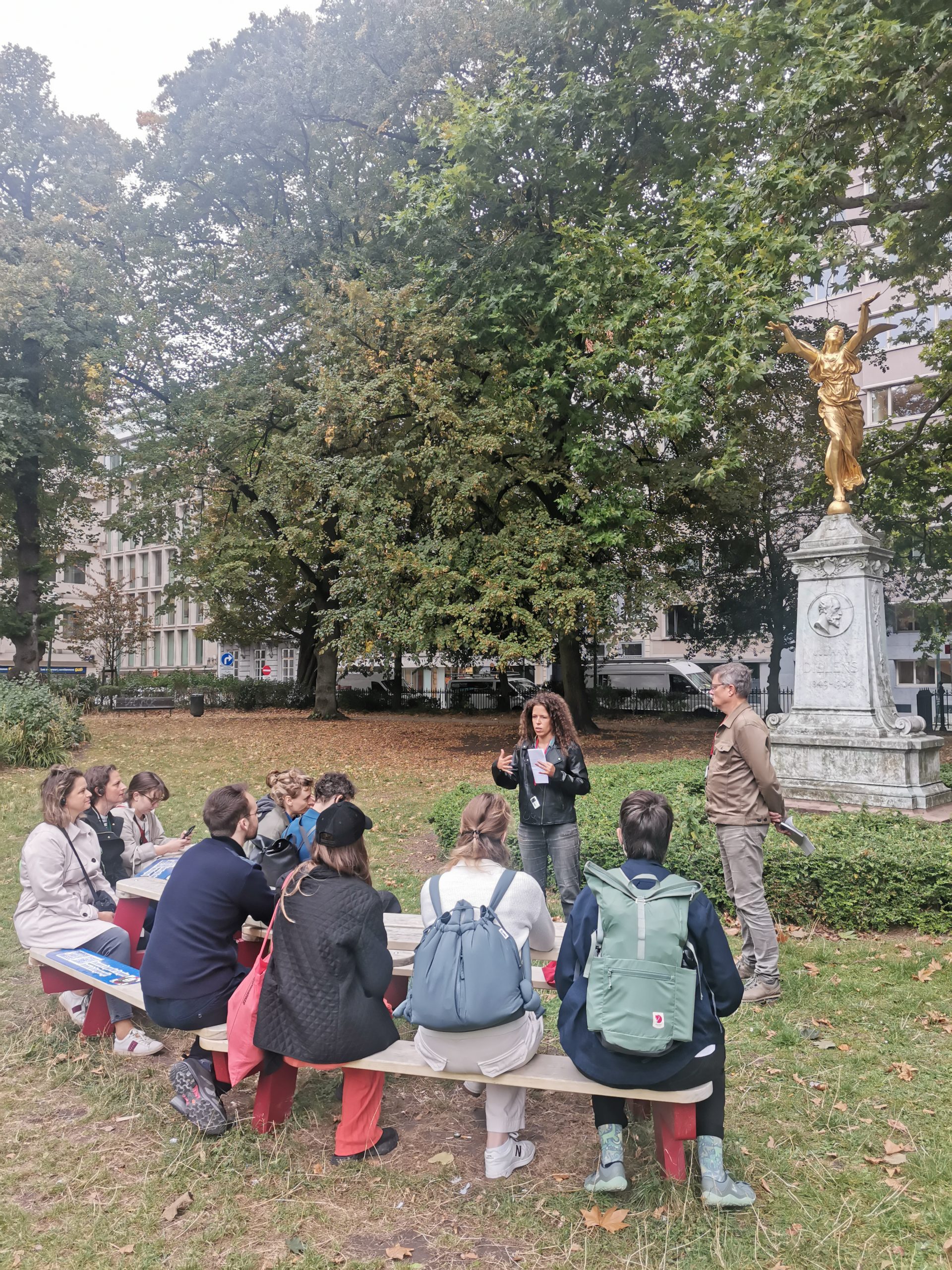
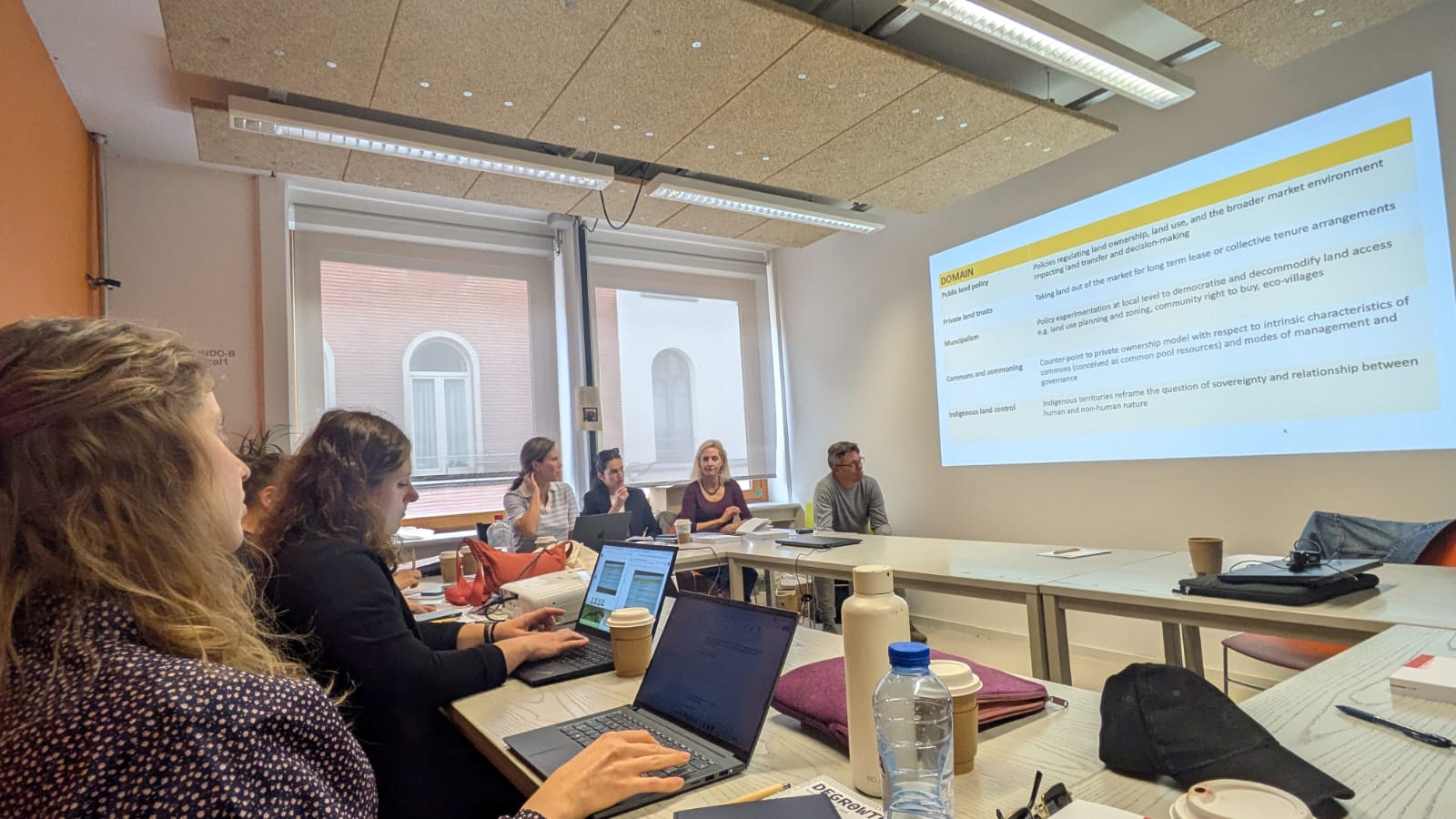
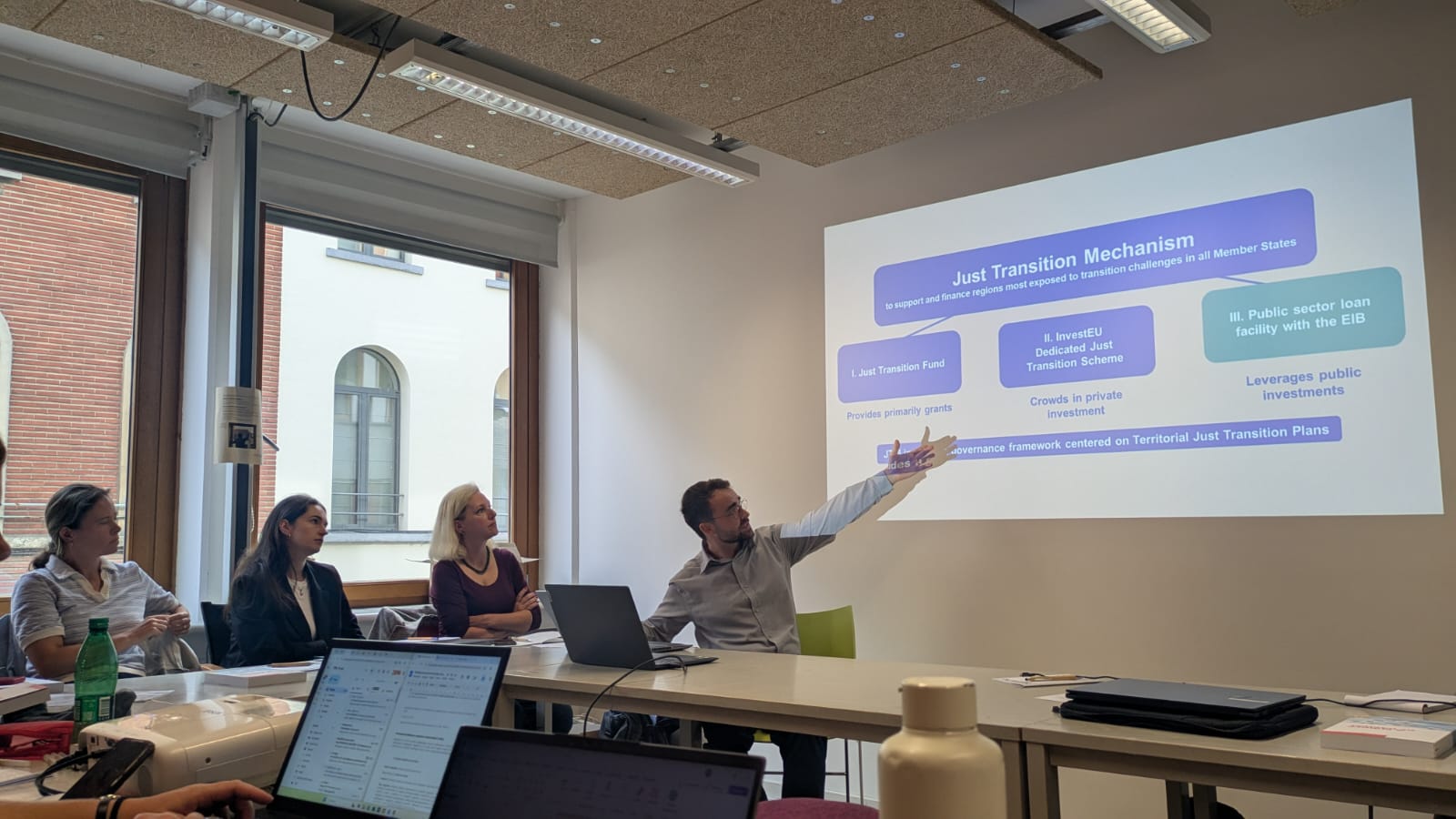
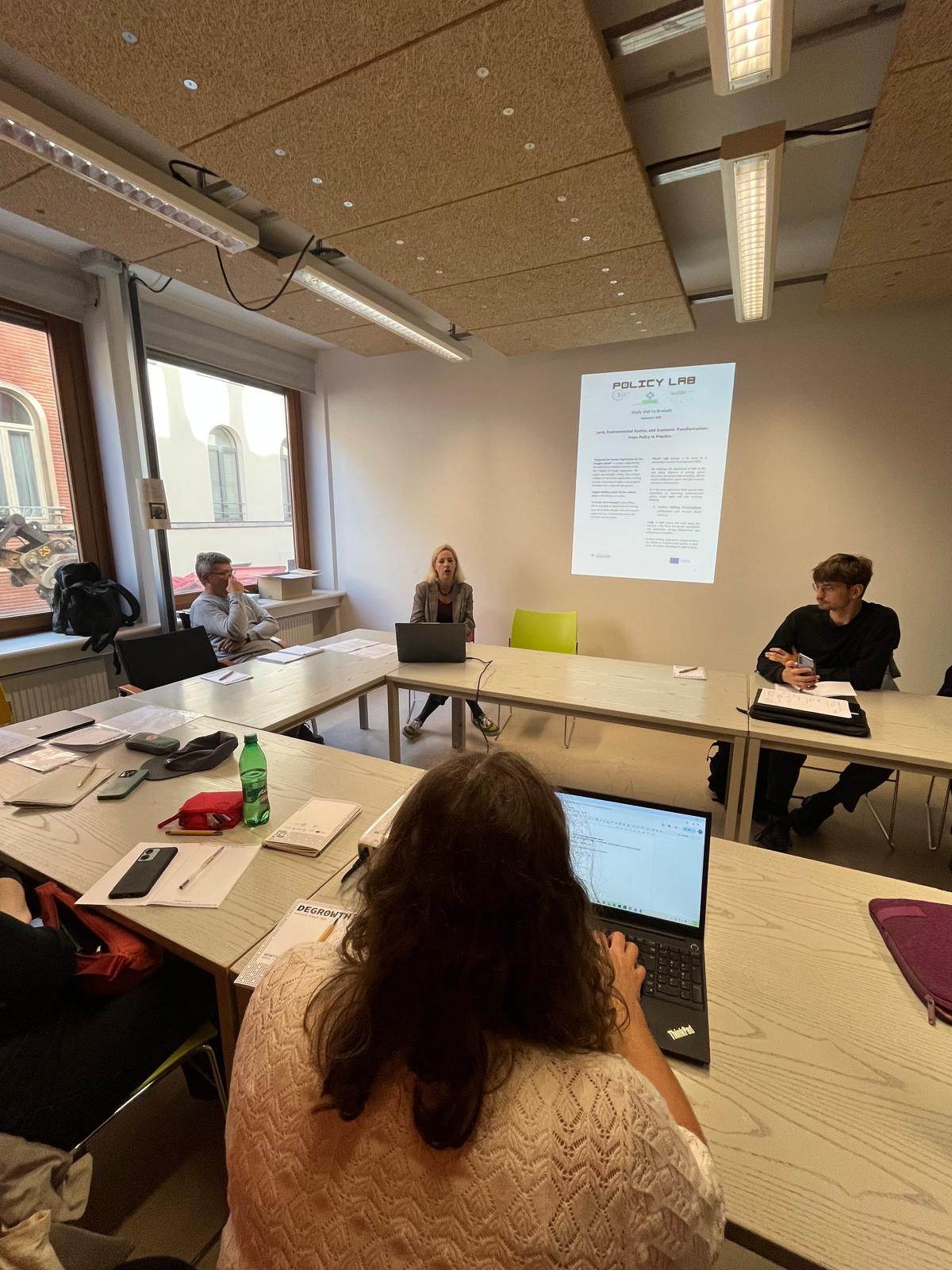
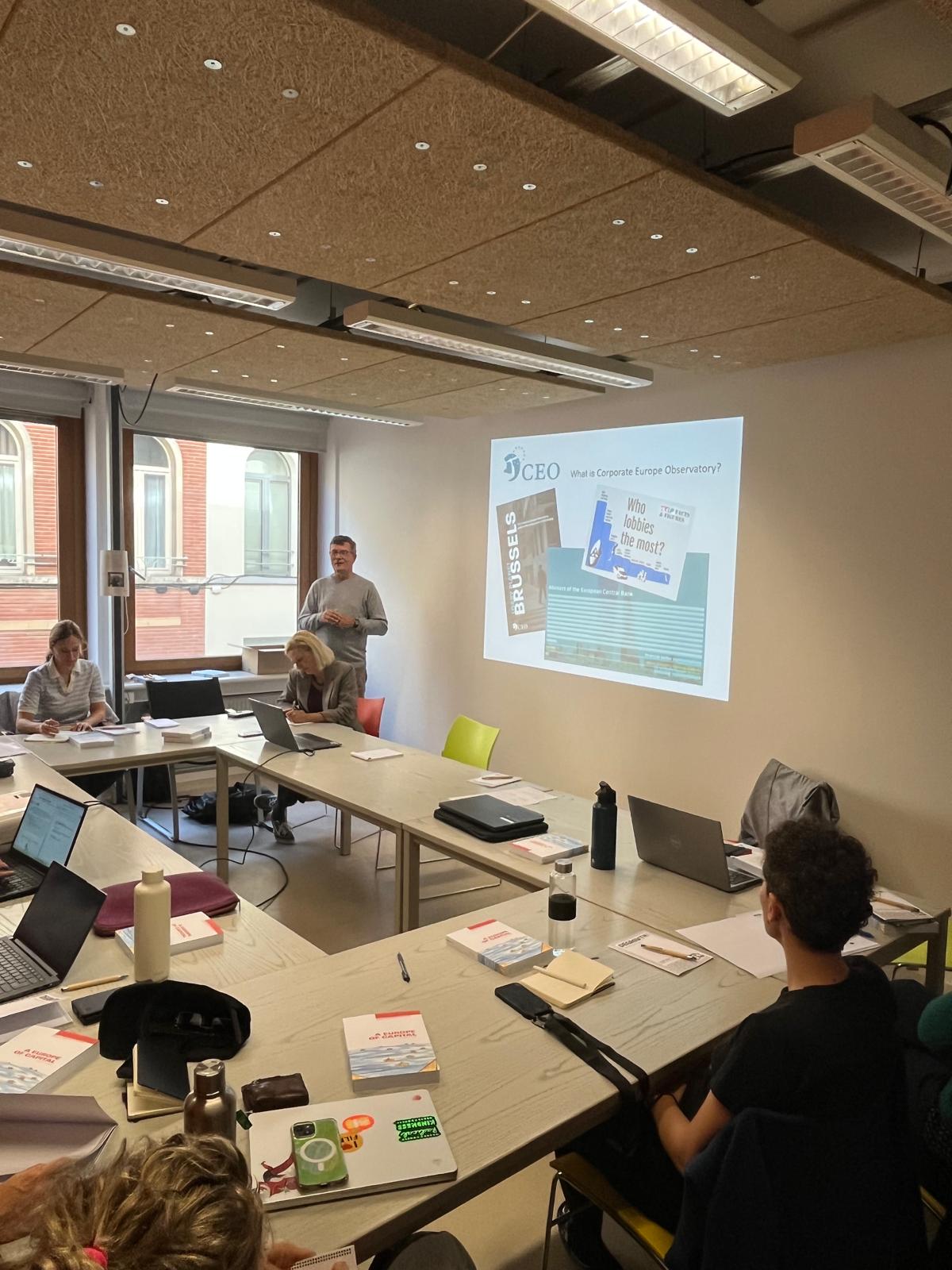
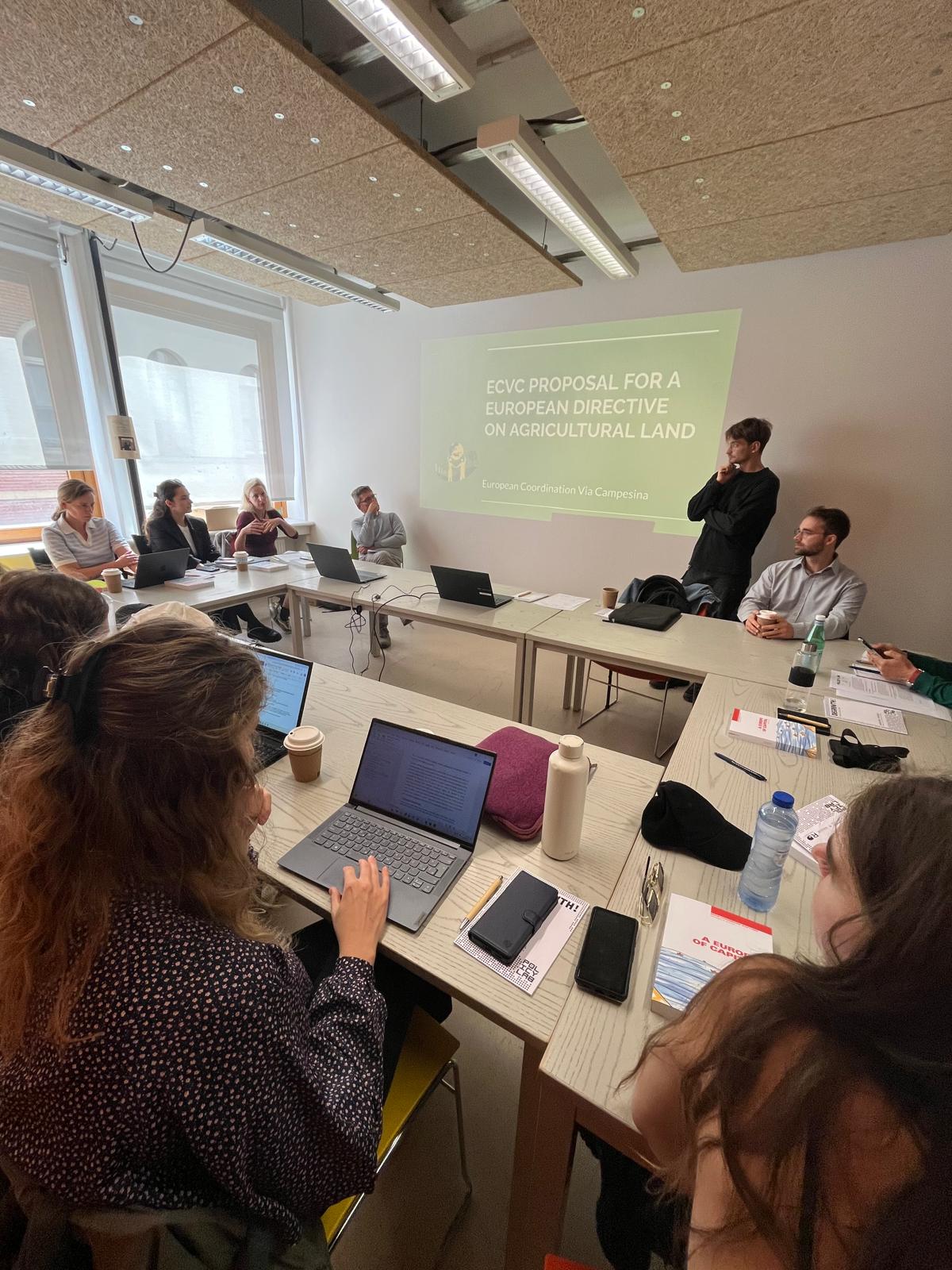



Coalition members of the project Preparing CSOs for the Struggles Ahead – part of the call Catalysts of Change: Monitoring, Advocacy and Coalition Building for Environmental Justice – travelled to Brussels for a two-day field visit and seminar. The goal: to strengthen a cross-sectoral coalition of civil society organisations (CSOs) working on land, environmental justice, and just green transition from a degrowth perspective.
You can find the full programme of our visit here.
Seminar: From Policy to Practice
Organised by Policy Lab, the seminar Land, Environmental Justice, and Economic Transformation: From Policy to Practice brought together distinguished experts and activists for five in-depth panels:
-
Kenneth Haar (Corporate Europe Observatory): A Europe of Capital – EU Competitiveness and Industrial Policy
Researcher and activist, working on democracy, and economic and social justice. He presented the main topics of his book A Europe of Capital (2024), focusing on how corporate-driven EU economic rules promote austerity and undermine social rights in EU member states and candidate countries.
-
Kevin Le Merle (UNU-CRIS): A history of Just Transition in the EU – towards a broader socio-ecological agenda?
Applied normative climate ethics researcher, studying the externalisation of the European Green Deal. He showcased a brief history of the idea of Just Transition, from its syndical and environmental roots, to its institutionalisation in EU policymaking. He delved into gaps in the European Green Deal’s social dimension, and addressed potential linkages between social & environmental agendas.
-
Eliaz Moreau (European Coordination Via Campesina – ECVC): Land reforms for agroecology and strategies to influence land policies
Policy officer, who presented ECVC’s proposal for an EU directive on agricultural land, highlighting the connections between land governance, land use and the agroecological transition. He emphasized the need for redistributive land policies, linking it to national land struggles, European policy frameworks and La Via Campesina’s international vision for agrarian reform.
-
Sylvia Kay ( Transnational Institute – TNI): Regulating land markets to achieve the EU sustainability agenda
Researcher, specializing in agrarian and environmental justice, food systems and land policy. Her recent research (2024) on land redistribution in Colombia and EU–North Africa agricultural trade, had a strong focus on inequality and resource depletion. Drawing on collaborative research (Calo, Kay, Moreau, 2025), she explored how EU land policies and restructuring of land markets can be transformed to align with social and environmental sustainability goals in both rural and urban contexts.
-
Diego Marin (European Environmental Bureau – EEB): Why an endless economic growth–based system is not fit for the future
Senior policy officer for raw materials and resource justice. He works with the Global Policy team and holds a Master’s in International Development from the University of Kent, specializing in political strategy, communication, and environmental and social issues. He has conducted field research in Peru on extractivism and poverty. His contribution focused on economic transition and a fact that endless economic growth–based system is not fit for the future.
Field Visits in Brussels
Community Land Trust Brussels (CLTB)
Participants visited the first CLT in continental Europe and a reference point for housing movements across the EU. By separating land from housing ownership, CLTB keeps land permanently out of speculation and ensures affordable, secure housing.
Residents co-design and co-manage their homes, creating inclusive, resilient neighbourhoods. The visit highlighted:
-
community building through care networks and shared spaces,
-
intergenerational and gender inclusion,
-
sustainable practices such as energy communities, shared mobility, and collective gardens,
-
resident-led social economy initiatives.
Lobby Tour: Tracing Power in the EU Quarter
Led by the Corporate Europe Observatory (CEO), the Lobby Tour explored the geography of power in Brussels. It offered an eye-opening complement to the previous day’s panels, grounding policy debates in real-world dynamics. Participants traced corporate lobbying hotspots, examined case studies of corporate influence on EU policymaking, and gained first-hand insights into how lobbying shapes EU institutions and policy outcomes.
Brussels bubble perspective
Each presentation on our field trip and seminar to Brussels unpacked key questions of democracy, justice, and sustainability—from corporate influence on EU policy and the gaps in the European Green Deal’s social dimension, to proposals for land redistribution and strategies for moving beyond growth.
________________________
“Funded by the European Union. Views and opinions expressed are however those of the author(s) only and do not necessarily reflect those of the European Union or The Netherlands Helsinki Comittee. Neither the European Union nor the NHC can be held responsible for them.”
#EUfunded #NHC #CatalystofChange #EUValues
